
Solo migrations.
Sometimes the view of the moon simply bowls me over. I remember the cab ride to the Nassau airport the first time I left for Mayaguana. As the cab negotiated morning traffic, the moon showed itself between old buildings, walls and palm trees. The driver and I didn’t speak much. Sitting in the back of the cab, I caught glimpses of a city not yet awake. A skinny stray dog – referred to as a “Royal Bahamian Potcake Dog” – ran across a parking lot, a giant rat in it’s mouth. The dog’s demeanor—excited, eager, ebullient—seemed to say, “Today is going to be a great day!”
I laughed.
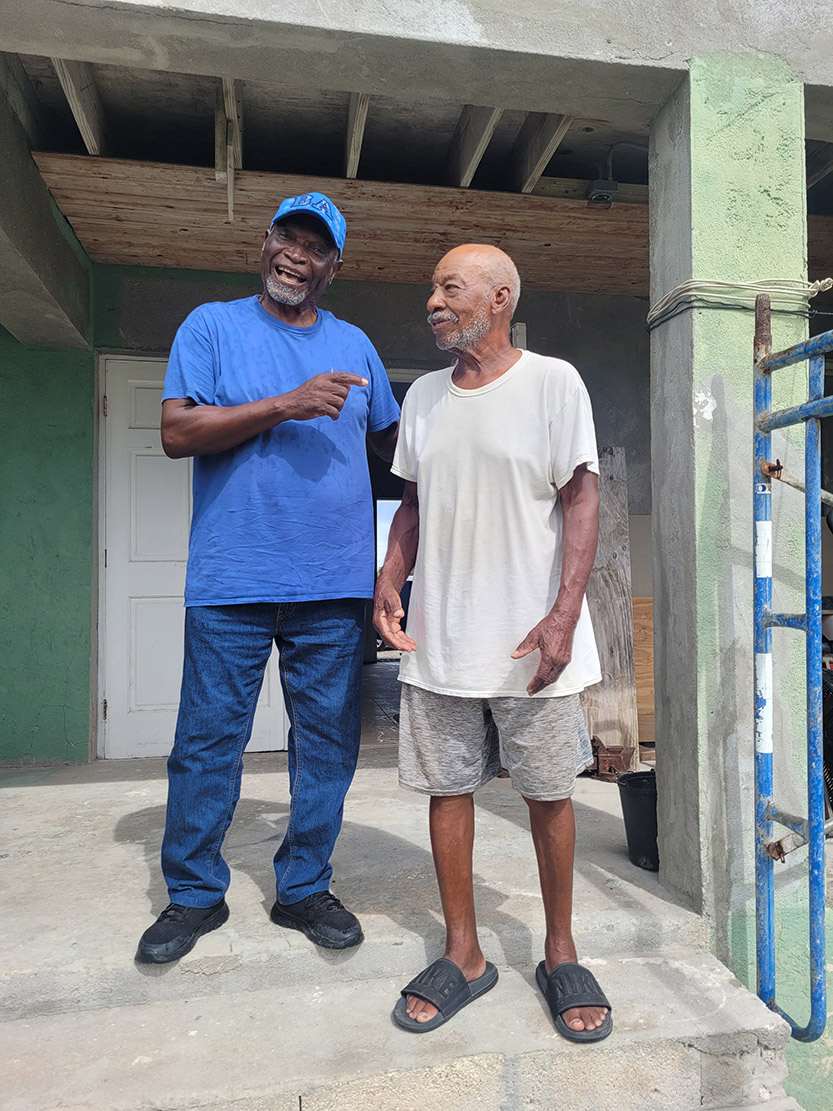
On my first visit to Mayaguana, Huel met me at the airport. He brought the car I’d rented and we took off for my Airbnb. When I took the wheel, he’d said, “Now, Marcy, what is the first rule of driving in the Bahamas?”
When my face betrayed my ignorance, he answered, “Stay on the left side of the road.”
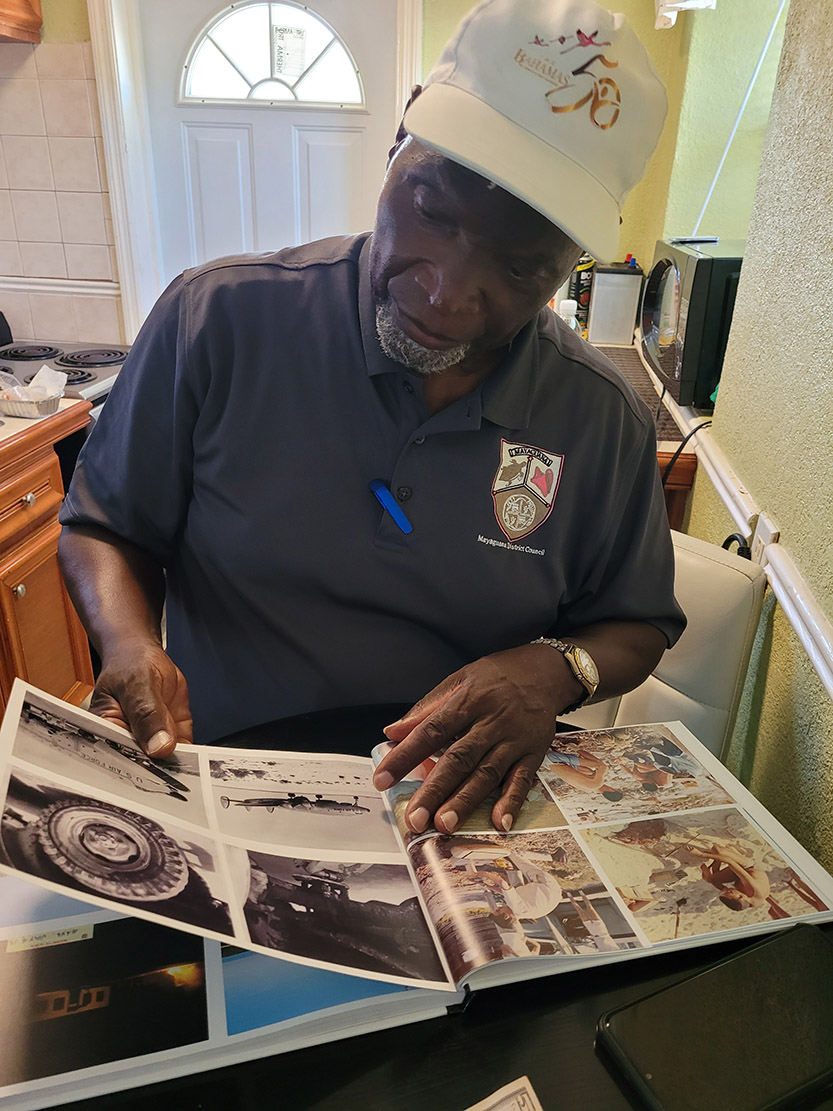
We spent the next few days on a trek to discover places my uncle had photographed. Huel had been a child when the base was active and had few memories of it – mostly riding in Jeeps and watching movies at the base movie “theater” – an outside screen with the audience in folding chairs.
Born and raised on Mayaguana, he spent his career elsewhere. At eighty four, he’s now retired and living in Pirates Well.
Huel tells self-deprecating stories, which completely endear him to me. There’s the story about the time when he was a child, he was supposed to gather water for the crew of the mail boat – owned by his father. He fell asleep instead. There’s the story about fishing with his friend, Leon – Leon made him jump in the water and there was some sort of deadly denizen in there. There’s the story about the time he served the mail boat crew a barracuda for dinner and everyone got sick. A female nurse gave them all black coffee enemas. “I was never so embarrassed in my life!” There’s the story about …
“Is that too much information, Marcy?”
“You know who you need to talk to? You need to meet my friend Leon. He taught me how to spear fish.” Huel grinned, like he was passing on a hot tip.
We head on over the Leon’s.
Leon
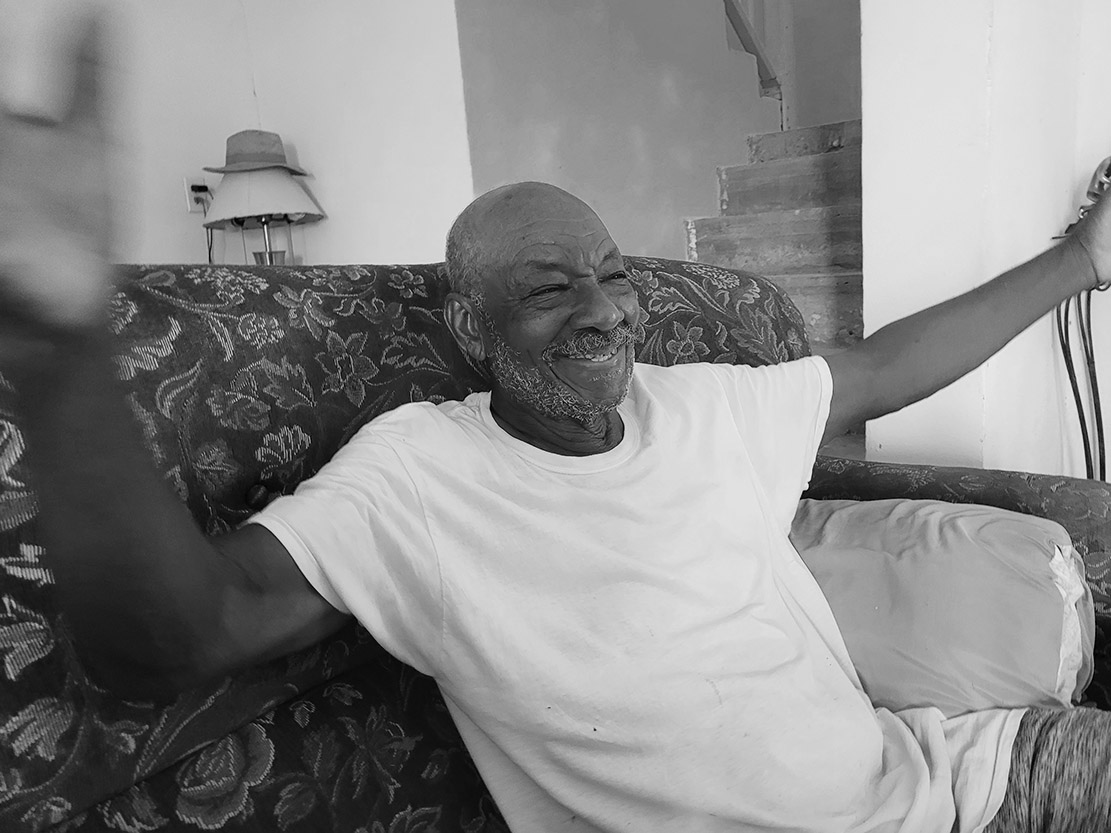
“Do you mind if I record you?” I ask Leon.
“I wish you would!” he answers. “How else am I going to remember what I say?”
Knowing what it is I’ve come to hear, Huel prompts Leon, “At that point the base was the main source of employment.”
“The main source?” Leon cuts in, incredulously, “It was the only source!”
Huel tries to walk it back. “Well… there was the teacher and the constable.” He’s thinking out loud, almost ticking off jobs on his fingers, trying to remember something—anything—besides U.S. contractor work. “At one point, the teacher was also the commissioner …”
Leon, laughs.
It’s the easy banter, the background music, of a long standing friendship.
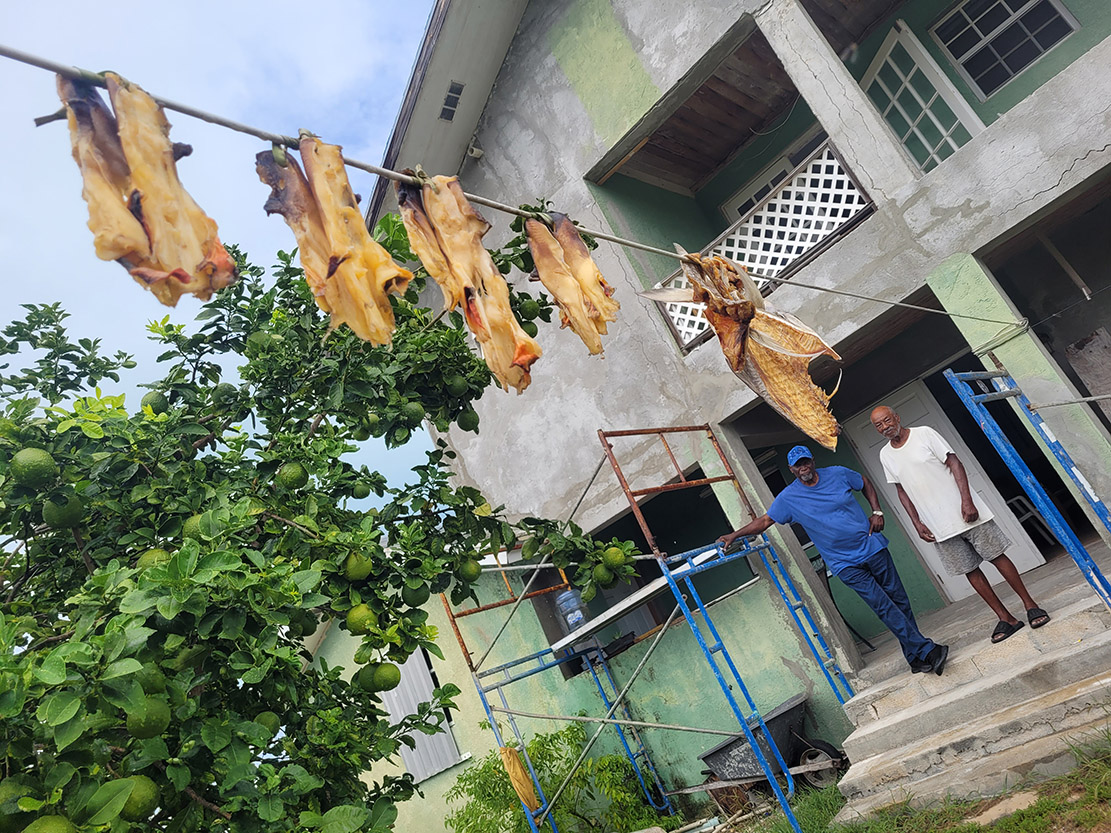
Leon’s home, in Pirates Well, has a main floor open to the ocean breeze. There’s a garden out back with fish drying on an overhead line. On my first visit, we — me, Leon and Huel — sat in his living room and talked about when the base buzzed life into Mayaguana. Leon did odd jobs at the PX and worked the outdoor movie theater.
“It was the first dollar I ever made.” he said.
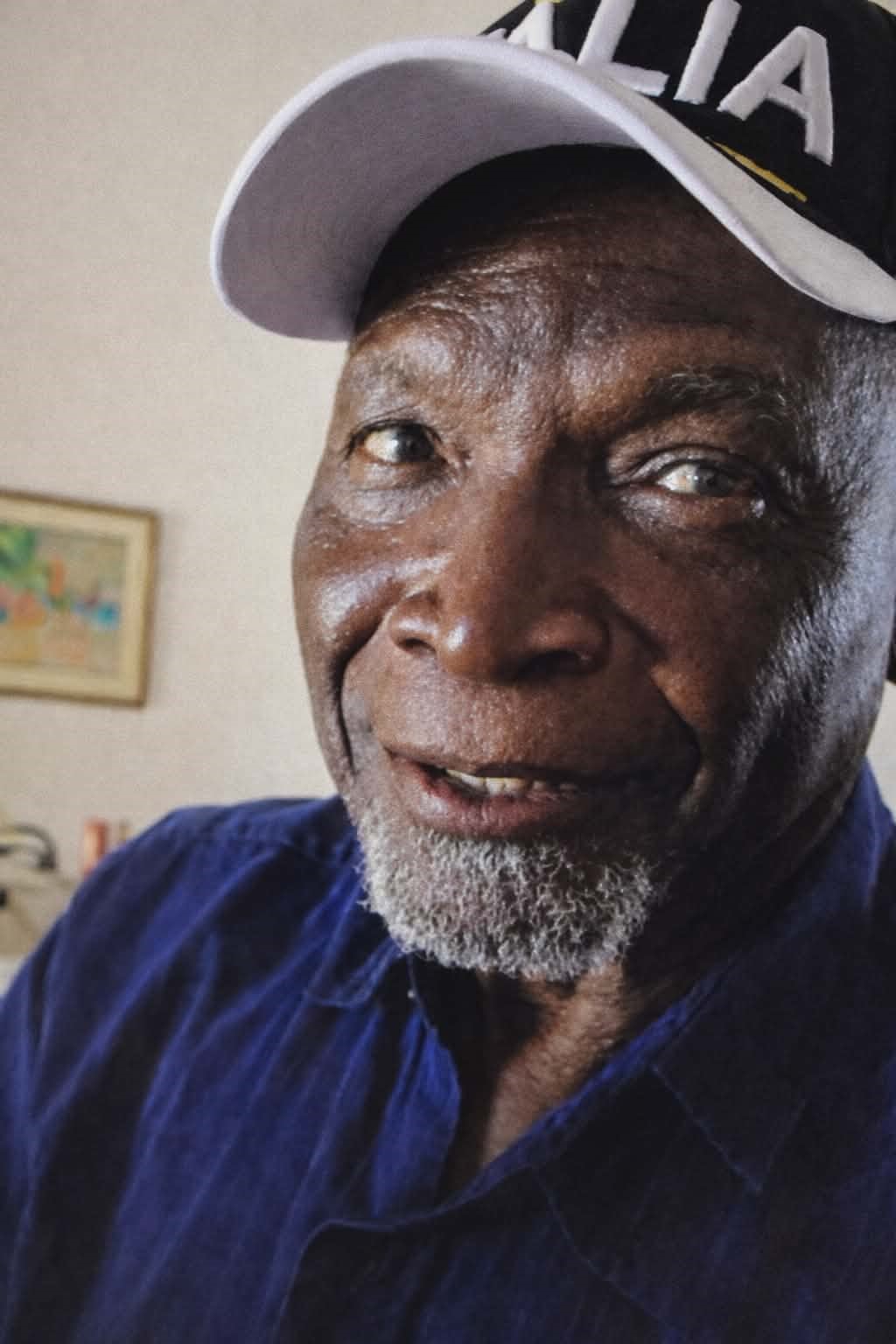
Leon, wiry, with a head full of fishing stories, is eighty-six as of December, 2025. He worked at the Army Base (though he calls it Patrick Air Force Base) on Mayaguana when he was in his teens. He thinks he started around 1954.
“I slept in the mechanic’s shop.” Leon continued.
“That couldn’t have been comfortable.” I say.
“Well, now, don’t you laugh. Because if you laugh…” he looked at me sideways, pausing. My face resolute. No signs of laughter here. He told me they had large tents on the beach where he was supposed to stay. He rode his bike down there. It was night, and he was in the tent all alone. A menacing apparition, wearing a black suit and a black hat — Did he say top hat? — came to the tent opening.
“You’re not supposed to be here! Go home!” it yelled.
“I sucked my teeth and turn my back.” Leon said.
It visited two more times that night. The third time …
“Oh boy. That last time … my skin turn like concrete.” he said, with an eerie catch in his voice. “I jump on my bike and not stop until I was at my grandfather’s house.”
Not only do I not laugh, I am absorbed in his telling of this story. His was a chilling experience and I believe him.
I tell him about where I live and that we, too, have our hauntings. The old hotel in Tokeland has a resident ghost named Charlie.
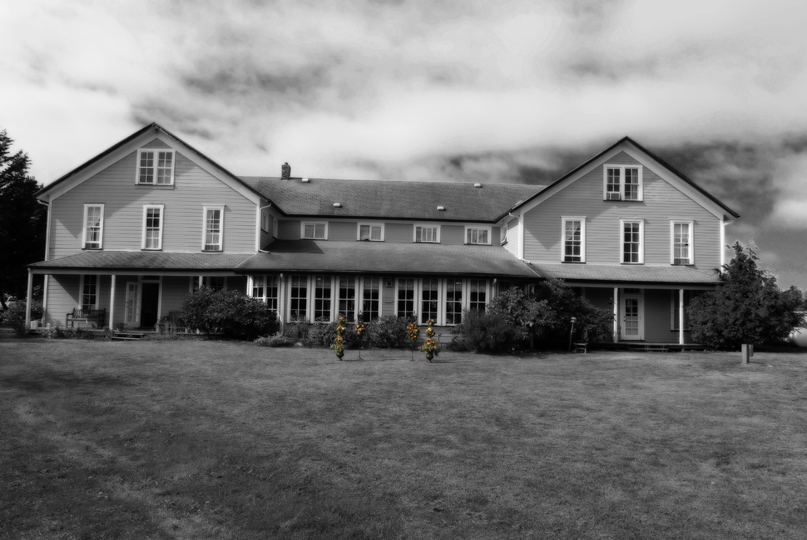
Legend has it that Charlie was a Chinese immigrant who escaped from a ship trafficking in human cargo. He died of smoke inhalation while hiding in a secret space behind the Hotel’s fireplace — hiding from smugglers whose mostly Chinese victims were forced into what amounted to slave labor in the Pacific Northwest. I tell him this, eager to express our common ground. Oceans away – Islands alike. He’s seen a ghost creature – I’ve got a ghost creature story.
He looks at me like I’m nuts.
On a later visit to Leon’s, I am joined by my cousin John and his wife. We learn more of Leon’s story: When he was sixteen, he ran away from Mayaguana. Let’s just say he “liberated” a boat from the shore and made a break for the mail boat, which was anchored offshore. He went to Nassau.
“I was leaving the South
to fling myself into the unknown…
to see if it could grow differently,
if it could drink of new and cool rains,
bend in strange winds,
respond to the warmth of other suns
and, perhaps, to bloom.”—Richard Wright, in his autobiography Black Boy. The sentence inspired Isabelle Wilkerson’s book The Warmth Of Other Suns.
“I ain’t afraid to tell nobody this — I was sleeping in the graveyard at night and eating out of the garbage bin.”
He was “recruited” – he says, by the U.S, government – to pick crops in the U.S. — oranges, grapefruit, apples, corn, tobacco… From Florida to Minnesota, he relates a top-to-bottom, Warmth-of-Other-Suns tale.
He came back to visit the island when his mother gave birth to his younger sister. It was during this visit that Hurricane Donna attacked.
“I was walking a back road from Betsy Bay to Abrahams Bay and I lay down on the lee side of the grass.” He was stuck outside, during the hurricane!
Suddenly, Leon jumps up and goes to his closet. He rummages around for a minute, then emerges with a long trench coat-like jacket.
“This is the jacket I was wearing. I wrapped it around me. This is the very one. I would NOT throw this away.”
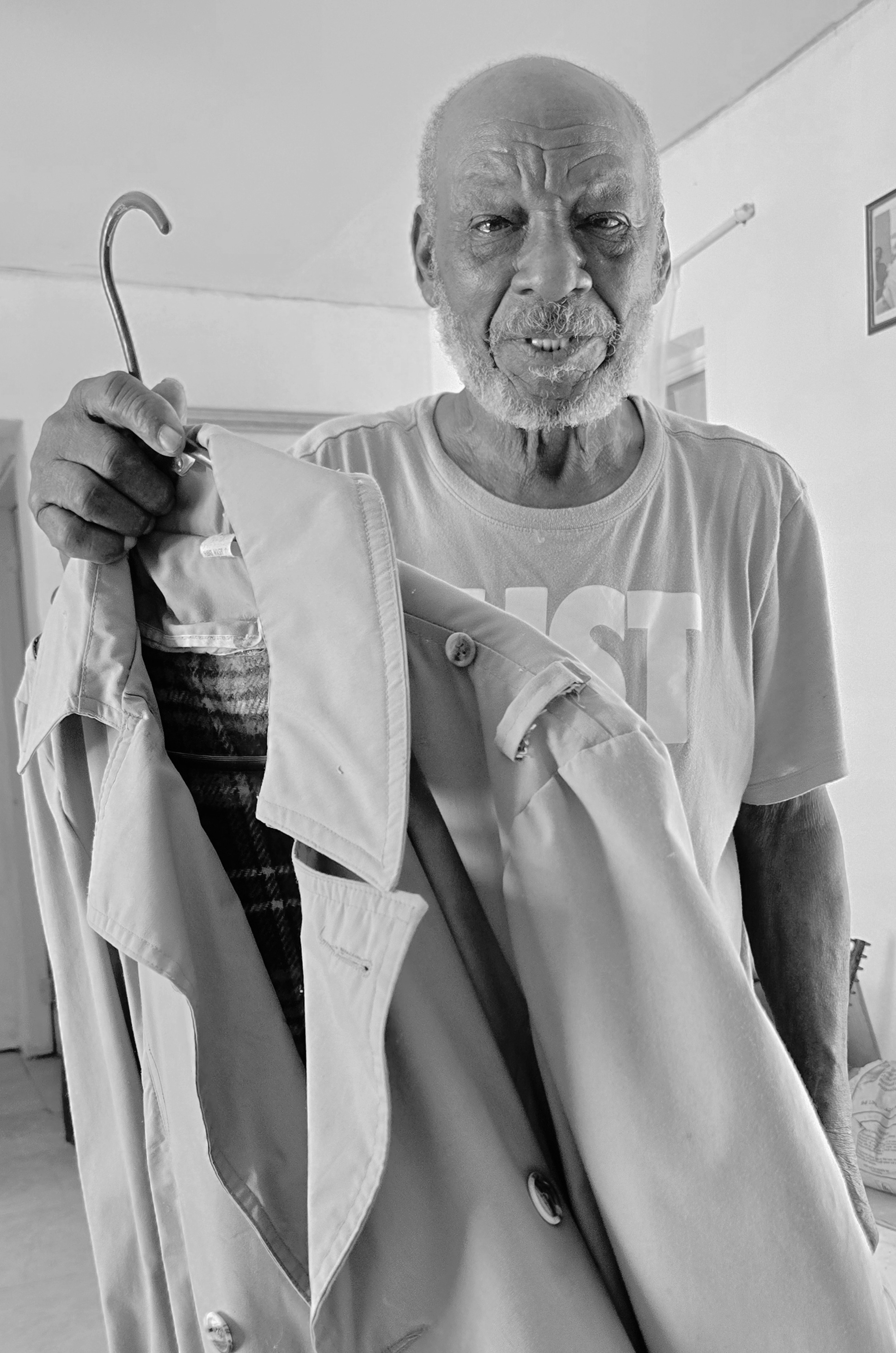
After the hurricane, he says, the water was like glass, but the island looked like it had been ravaged by fire.
He eventually went back to Nassau and became the head of security for the Bahamas School system. He had a wife and eight kids.
“My wife has left for the graveyard. She was the sweetest woman in the world.”
“My best days on Mayaguana was at Patrick Air Force Base.” He tells us that he thinks people changed after the base left — and not for the good.
I’ve had the feeling that there’s a kind of third world infrastructure on the islands — an infrastructure inhabited by first-world people. It creates a tension that islanders need, in cycles, to escape. They go to “the city” (Nassau, or Freeport, or the states). Sometimes returning. Sometimes not.
We discuss his current living situation — arguably one of the nicest homes in Pirates Well.
“It’s a far cry from the cemetery.” I say.
 Outermost Uncle
Please ask questions and leave a comment. (Some folks are unable to comment – I think it’s a Wordpress thing and I’m really steamed about it.) You can also email me.