
Mayaguana, Tokeland, and the Long Way Around
“Is that Q as in Cuba? Or Q as in Quebec?”
The woman’s voice floated above a hundred other conversations – only one side of each audible – the familiar din of a faraway phone bank – this one belonging to Bahamas Air.
I waited, cell phone to my ear, while somewhere in Nassau or Freeport – or somewhere else entirely – my name was being misspelled. It took an hour and a half to thread a flight plan through the Family Islands. When I finally hung up, I had tickets – and the familiar sense that I was already far from home.
I live near Tokeland, a small fishing village comprised of an Indian reservation, and a crab cannery, on the southwest coast of Washington state. It’s south of another fishing village called Westport – often referred to by locals as “a drinking village with a fishing problem”.
Mayaguana and San Salvador have more in common with Tokeland than I expected. Oceans apart, the similarities outnumber the differences.
Oceans away, yet islands alike.
It was during my first visit to Mayaguana, that I met Marissa.
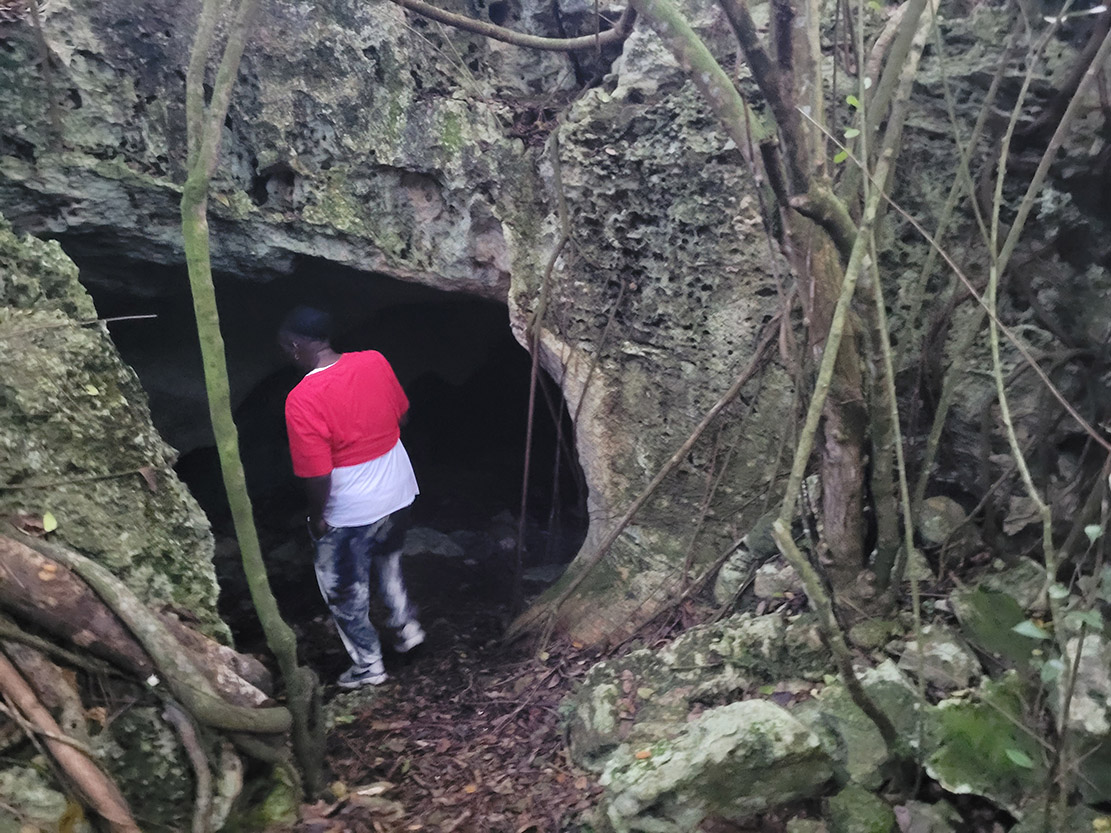
She was my guide to the fabled Bat Cave. As we hike the trail, Marissa speaks rapid-fire, like Bahamian rake ‘n scrape.
She’s a nature enthusiast, talking as we hike. “You thought you’d go here by yourself … no, I’ll go with you. Did you ever catch any of those pelicans feeding? They be so loud. They come into the bay -SPLASH! – and there’s a big-ass pelican! I think it’s a pelican. I mean, that’s a perfect picture moment. Shew! Something had a good meal right there.”
She points to scattered crab shells.
“He coulda become like a Conchy Joe.” she says, of my Uncle. I learn that “Conchy Joe” means a white man from the Bahamas. “The Conchy Joes have left … We could use a little variety.”
Before we reach the cave, I learn she has a godmother – also her cousin – who lived on the island when the tracking station was alive. I also learn there’s another cave. A cave with a resident owl. A big owl.
I’m forever learning things at the threshold – just before I depart.
Months later, I’ve returned – ready to meet the godmother-cousin.
I didn’t find Easlie by researching history. I found her by following Marissa.
Easlie Dean:
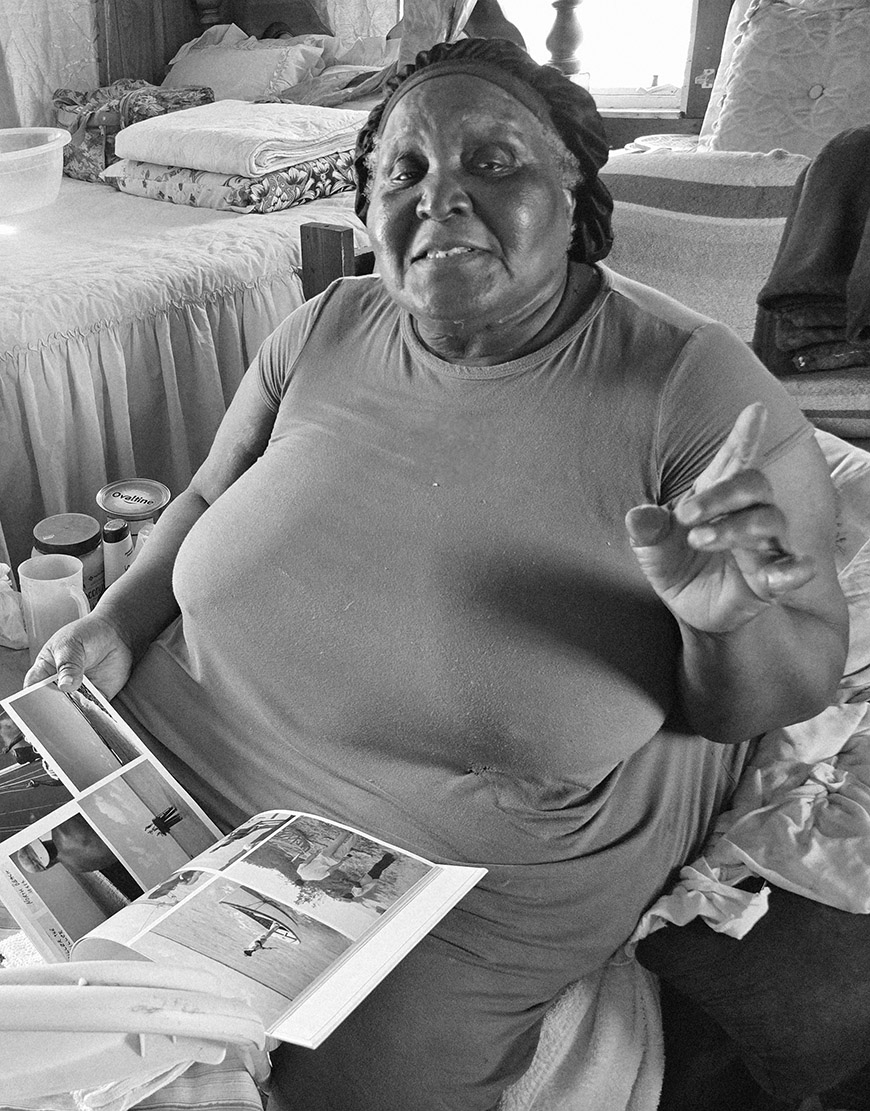
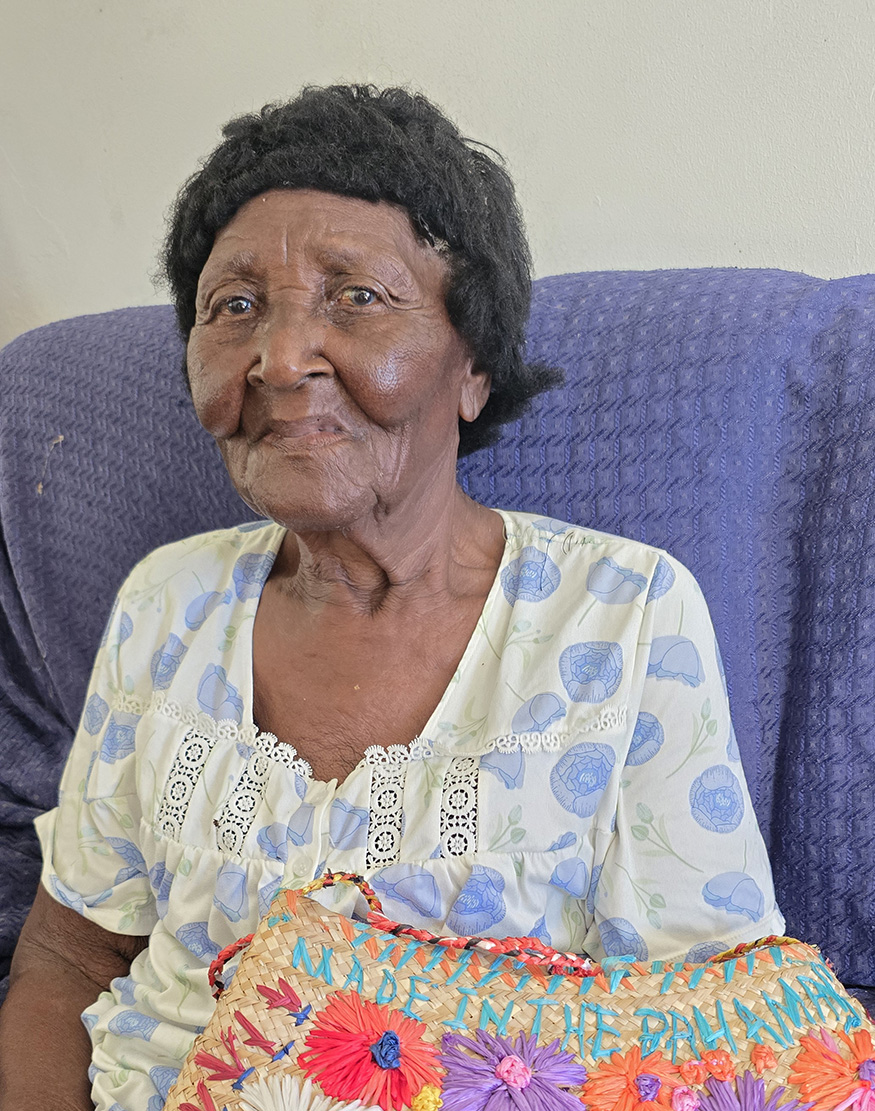
Easlie Dean lives in a modest home in Abrahams Bay. It’s midday. We sit close – Easlie, the oscillating fan, me, my cousin and his wife. Her goddaughter Marissa kneels in the doorway. The curtains are drawn against the sun.
In the first minute, I ask about the base.
“It opened in 1953,” Easlie says. “I was nine.”
I screw up my face, pretending to do hard math – which earns me a laugh. “So, you were born in ’44?”
“Yes.”
“Here?”
“Oh no! No no no.” She says it sharply – like I’ve suggested she’s from another planet. “I was born in Horse Pond.”
Horse Pond? That’s a new one. Turns out it’s not new. It’s defunct. An extinct settlement 6 miles east of where we’re sitting. Easlie tells us how Hurricane Donna destroyed Horse Pond. “We had a church.”
Remnants of which remain in the abandoned town. You can’t get there via land anymore, you have to use a boat.
A devastating hurricane in 1945 destroyed her village. After her home was lost to a fire, Easlie and her family left for Nassau and didn’t return until 1953. It was a total surprise to her to see the action taking place – the building of the airport, and the construction of missile tracking buildings on the new military base. People everywhere! Three times she said, “They had people from every nation!” The third time she said it, “They had people from EVERY nation! Turks, Eleuthera, Andros, Acklins … Everywhere!”
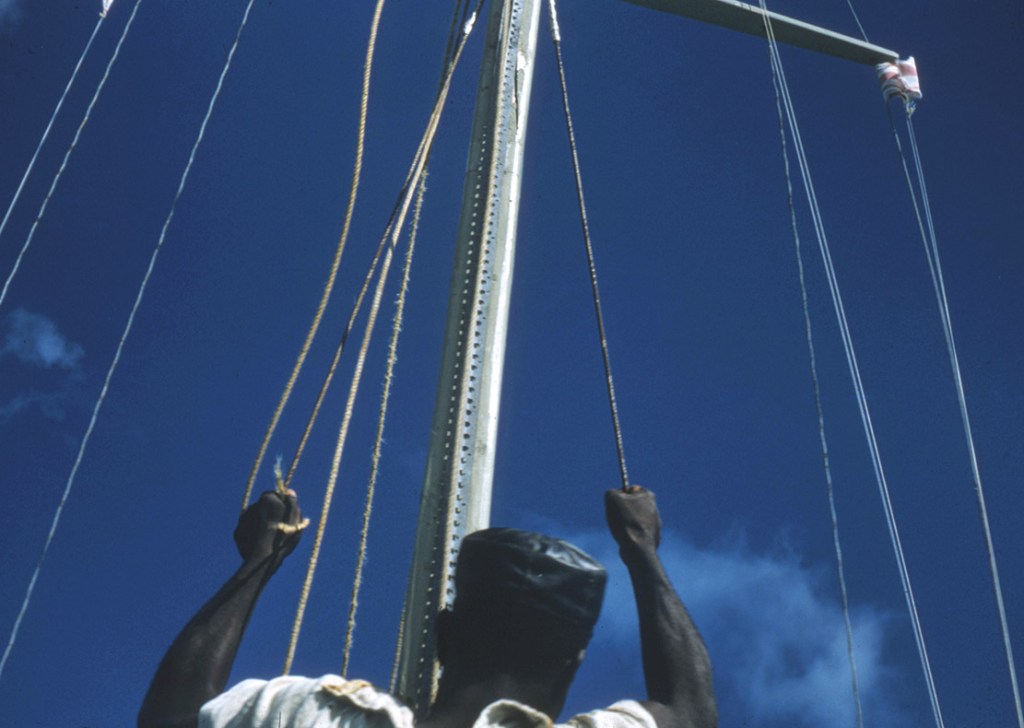
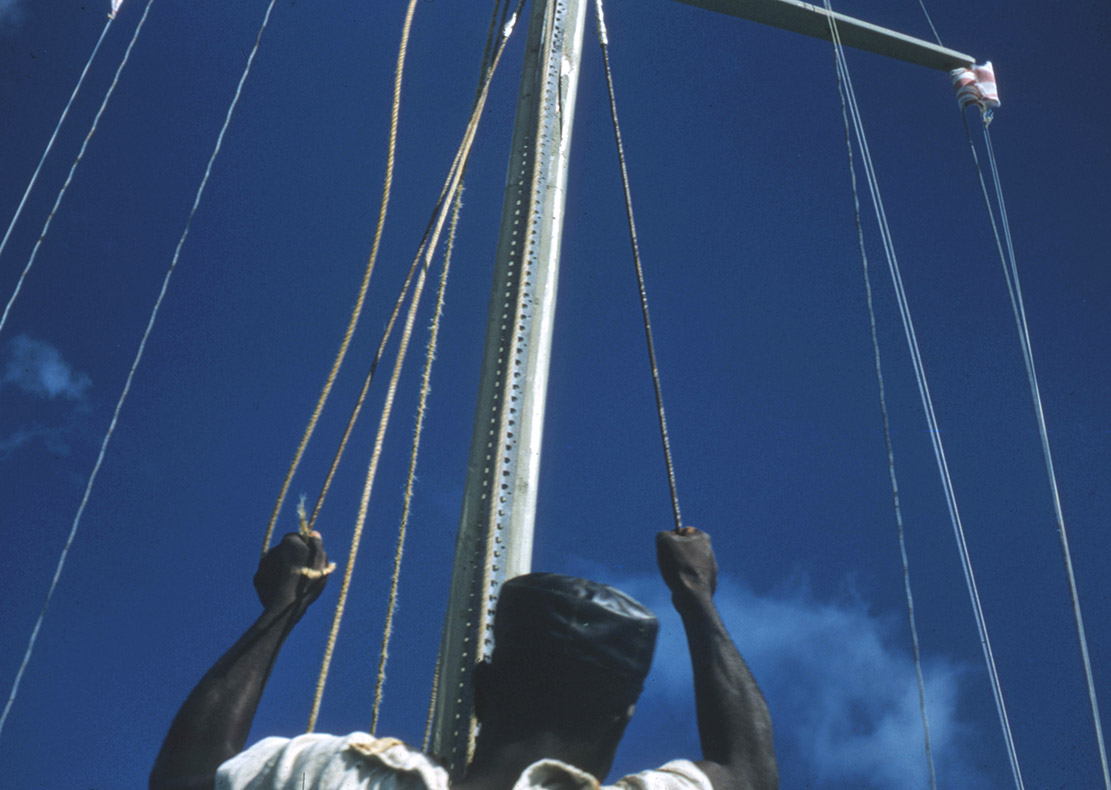
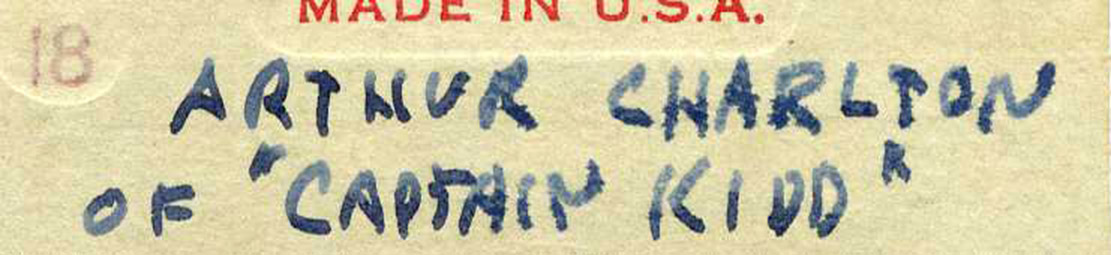
I show Easlie the book I’ve made of Uncle Bill’s Mayaguana photographs from 1957. Her interest is piqued. “The Charlton boys were out on their boats. They were great boatbuilders.” Arthur Charlton – the guy in Bill’s picture – is her cousin.
Another photo – the photo of Curtis Creek takes her back. “Curtis Creek was named after my granddaddy. Curtis Charles Gibson.”
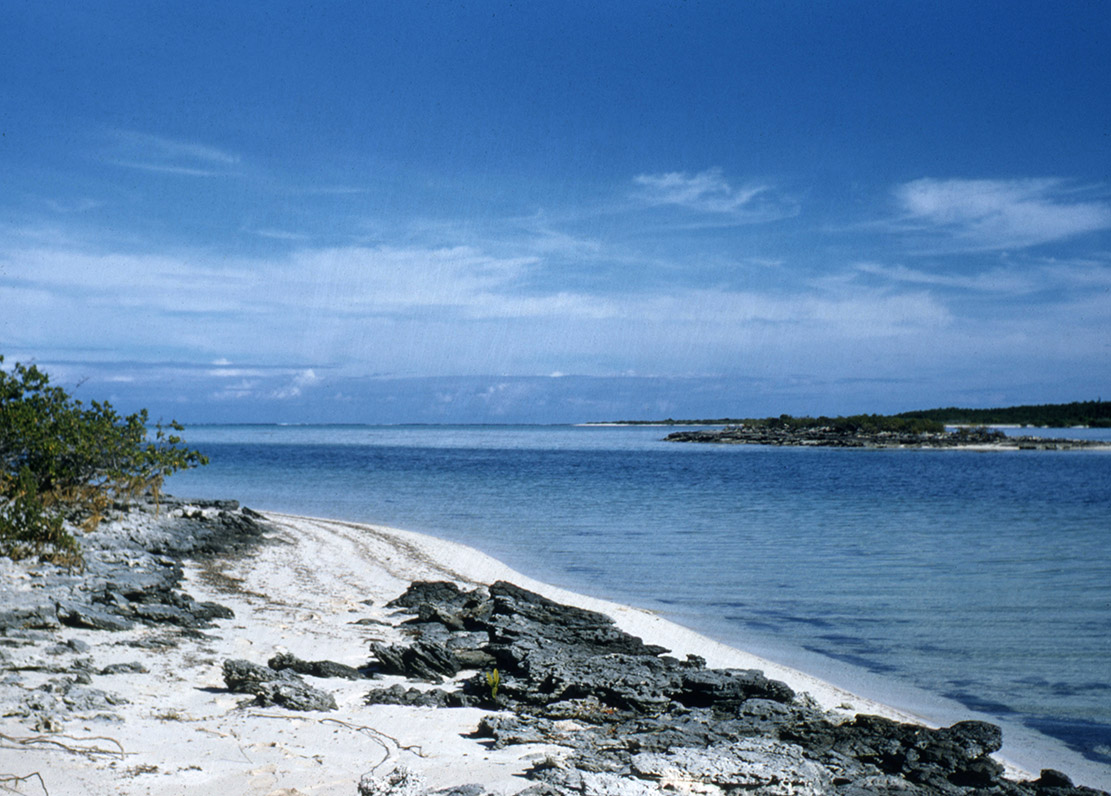
When I tell Easlie about our uncle’s disappearance, she says her family, too, has been visited by tragedy. The surrounding surf is often the site of shipwrecks and accidents. Her uncle went missing off a boat. He’d endured a dynamite accident while fishing the coral reefs, losing some use of his hands. He rehabbed from that dynamite accident only to disappear off a mailboat twelve years later.

I ask, “So, did the islanders mesh with the guys on the base?” Marissa speaks up, “Don’t be shy to ask her anything. Just ask her.”
“Were there any children from the men who were stationed on the base?”
Easlie says there were a few, but they all moved away. None are on the island.
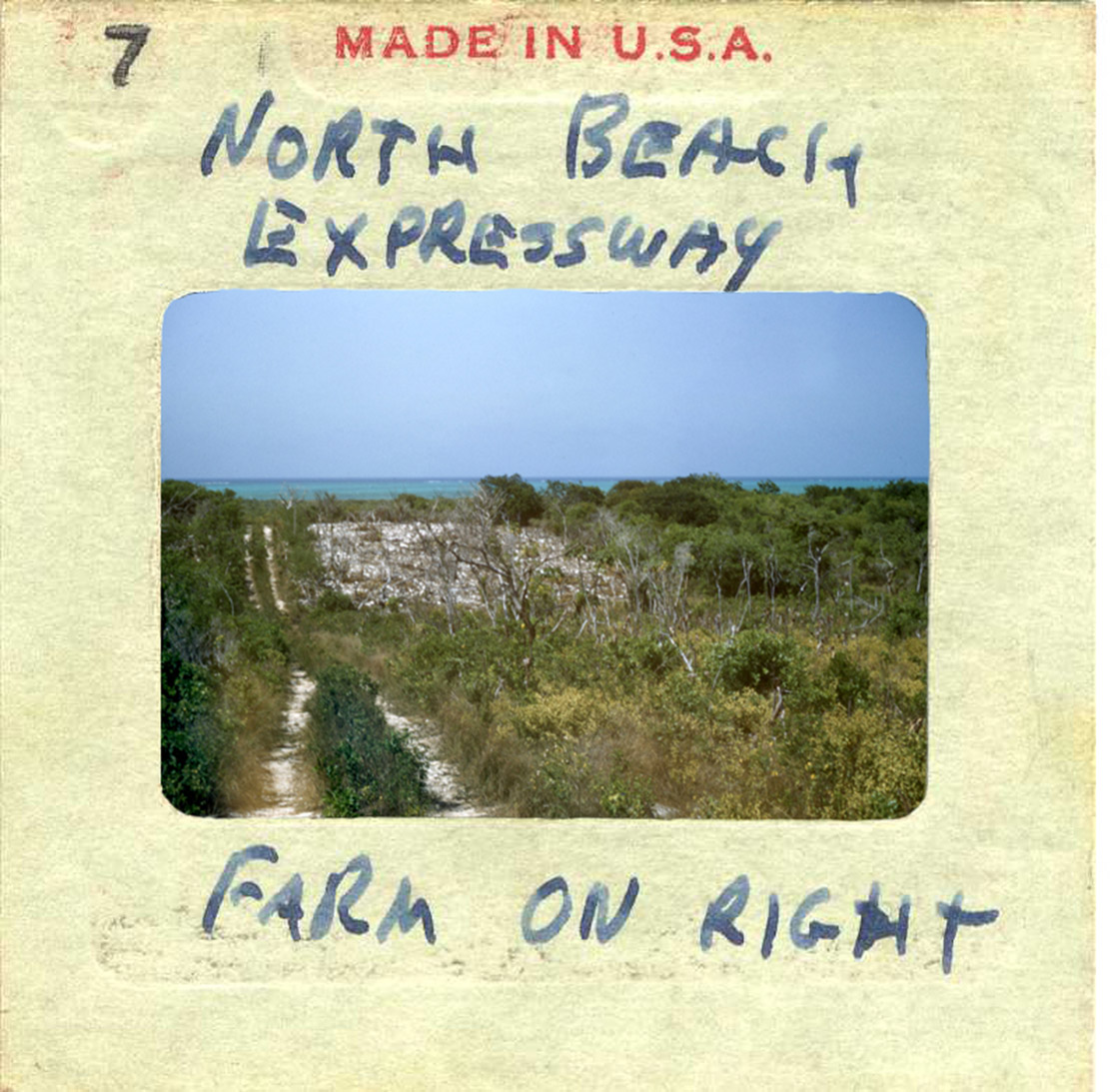
I ask about the photos of a large farm. Easlie was a farmer. She insists that “Mayaguana used to farm big!” They’d formed a cooperative.
Mayaguanans casually refer to the remains of the Central Control building as the “Twin Towers”. Easlie Dean used the term “Central Control”. When Hurricane Donna hit in 1960, they evacuated to Central Control – that building on the hill. She says, “The roof peeled off, right over our heads!” Hurricane Donna remains the gold standard for destruction. It destroyed much of the island, including many buildings on the Navy base. The storm meant the beginning of the end for Mayaguana’s military presence. Things began closing down and in 1974 the base was officially closed.
The photos I brought are the glue that cement something tangible to the past. The photographs dredge up memories that may not otherwise have been reclaimed. I have brought the Soviet camera to the islands before all of the stories disappear. (That, or that commie cam’s shutter quits again.) At the time, the camera itself was part of the story for me. I began to realize that the photographs I take with it now will stir future narratives.
I had no idea at the time, that I would also learn of hauntings, odd creatures and myths … shipwrecks.
Before we leave Easlie’s home for the other Bat Cave, the one down by POL, Easlie has one last comment.
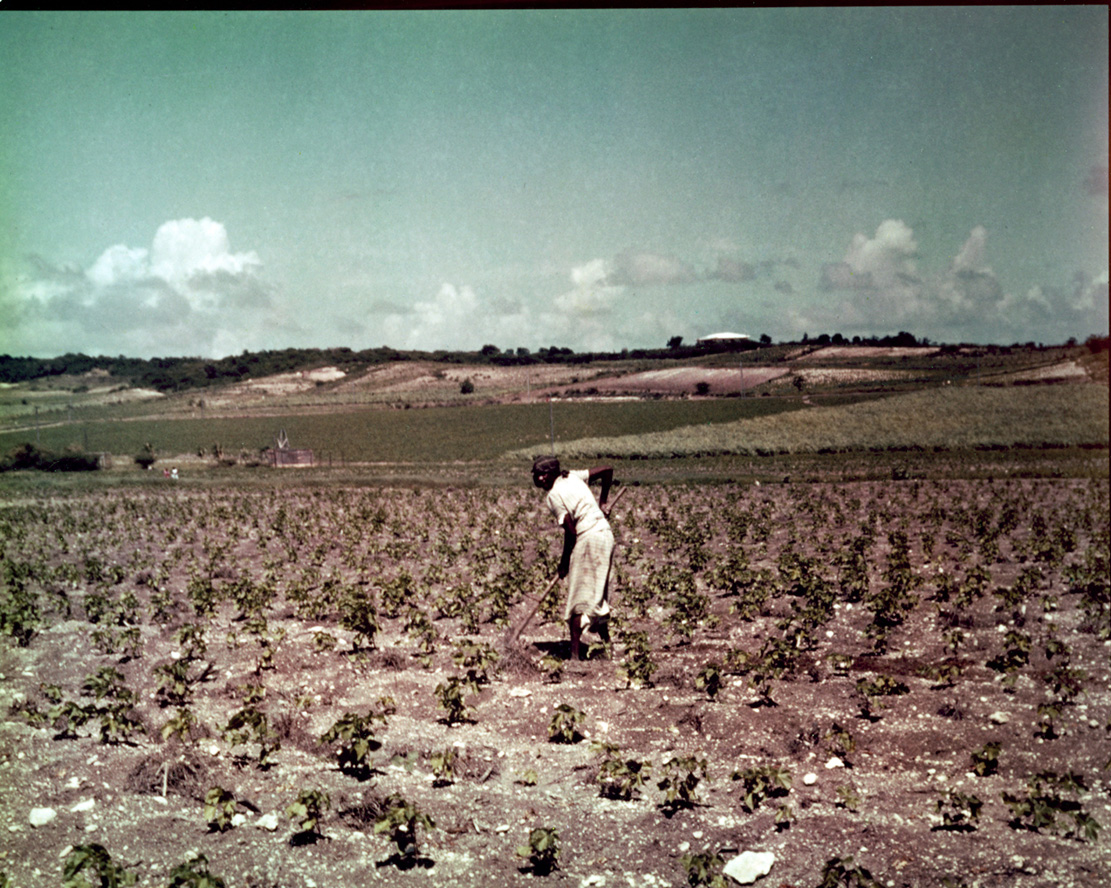
Easlie is proud of her farming days.
“I used to stand up close to ANY man on this island!


 Outermost Uncle
Please ask questions and leave a comment. (Some folks are unable to comment – I think it’s a Wordpress thing and I’m really steamed about it.) You can also email me.