
What the sea takes.
Angela’s story folds into the wider mystery I’ve been tracing – the stories of San Salvador, of disappearance and reappearance, of those the sea remembers and those it keeps.
The DNA kit, the visions, the vanished – they form their own tide. And each time I return to this island, I feel it pulling again.
I’m sitting across from Angela in the waterlogged heat of an overcast and frenzied Bahamian afternoon, waves crashing from the recent passing of a tropical squall. Lightning has clung to the outskirts of the island for days. The old lighthouse on the hill double flashes its warning every nineteen seconds.
A Vision and a Rescue
Angela was born on San Salvador Island. Her U.S. Navy father left when she was only one month old. Like many of the children born to fathers from the base, Angela never had a chance to know him. It was 1958 and her mother, with this third mouth to feed, struggled to get by.
When Angela turned 3, she was adopted to the keeper of Dixon Hill Lighthouse – a pastor and distant family relative. His wife became the woman Angela calls her “stepmom”.
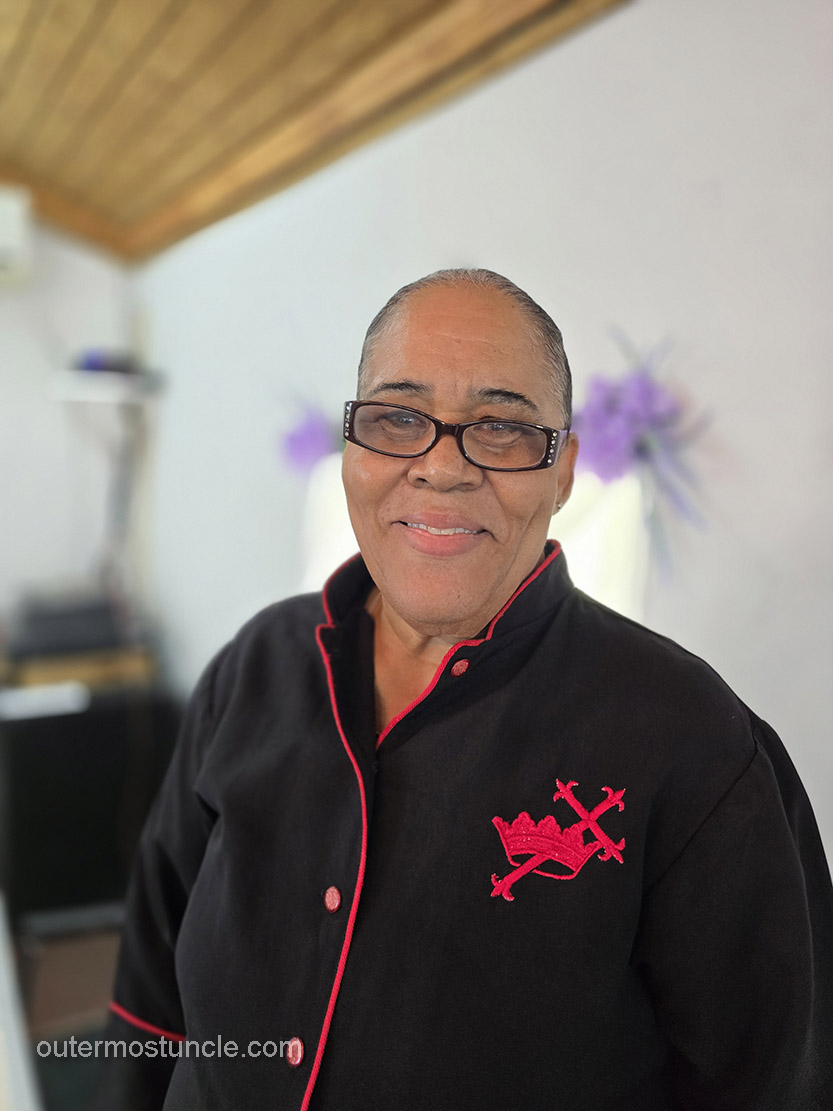
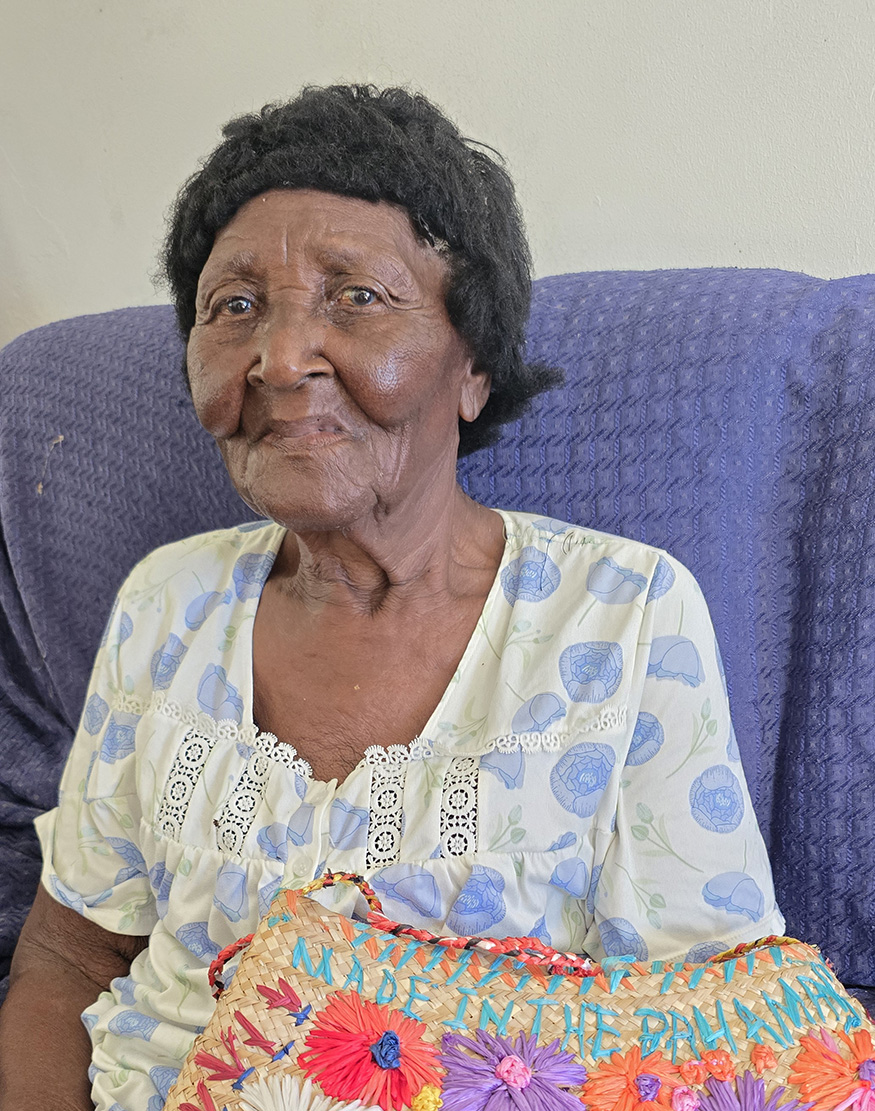
Today, Angela, her hair pulled tightly back from her face, speaks slowly, evenly, her voice carrying both wonder and pain. She relates the story her stepmom told her.
“The missionary lady who became my stepmom, traveled about to different islands preaching the gospel. She said she had a vision. You know how the Bible tells you about seers and all sorts of stuff? She had this vision that she was walking the beach in San Salvador. She didn’t know me. The Lord showed her that I – this child – was in the sea drowning. Like … I was drowning in the water. She told her husband, ‘Roy, you see that child there in the water?’ And she picked me up out of the water. ‘She’s going to mind me in my old days.’ “
Angela pauses, eyes searching the ceiling,
“And believe it or not, when she took sick and she passed, I was the only person at home. Her children were away.”
Angela was plucked from that chimeric sea in 1961.
The Missionary Years
She moved to Nassau with her adopted family. Her stepmom was a traveling missionary and together they journeyed throughout the islands, often by mailboat..
“The mailboat!” I interject -I have wanted to travel by mailboat to the islands ever since I learned of it.
“Yes. Oh, it’s quite the experience, Marcy. Everything was on that boat. We once traveled with a casket! They had a body on the boat.”
A casket would’ve stuck in my child-mind as well.
As Angela talks, I try to picture it: the 1960s, the sound of gospel hymns mixing with Bahamian rhythms – Dicey Doh Singers, Blind Blake, Joseph Spence – and American funk and soul drifting across the water.
Angela attended a little school house in Mason’s Addition, Nassau. She moved on to a Junior high on Wulff Road. She was attending Saint Matthew’s Parish Christian School, moving between schools and islands, when her stepmother passed.
Loss seemed to follow Angela, marking each new beginning.
Becoming
While Angela’s childhood was unfolding across scattered islands and mailboats, the Bahamas themselves were transforming – inching toward independence.
Angela grew up in an era when Bahamian women were voting for the first time, when the islands were finding their voice as she was finding hers. In 1965, Nassau saw its first traffic light. That same decade, a protest called Black Tuesday shook Parliament when Lynden Pindling threw the 165-year-old Speaker’s Mace out the window to a cheering crowd below.
Tourism grew as Cuba closed to American visitors, and the Bahamas became the new playground of the Western Hemisphere.
After her adopted mom died, “I had only my adopted father after that. I came back home when I was about 12. My mom took me back.”
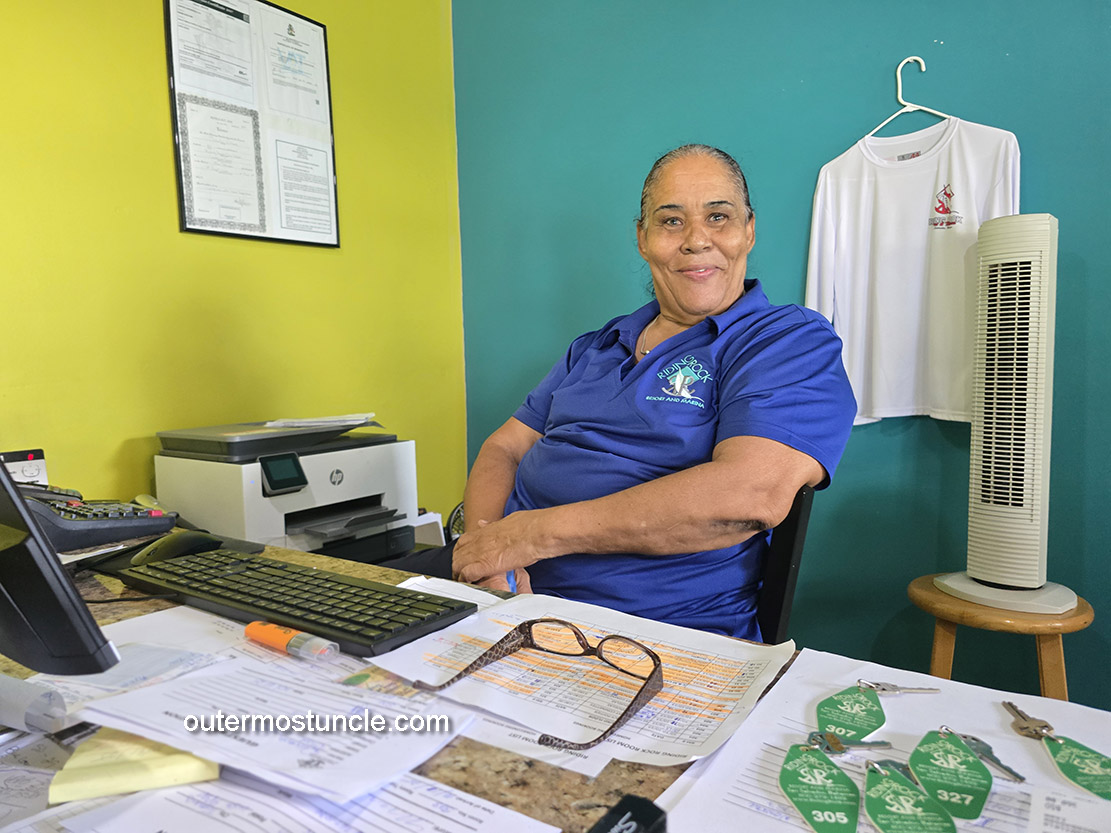
When Angela left San Salvador as a toddler, the Navy Base was going strong. By January of 1970, the base was decommissioned. Angela received her diploma from high school and went straight to work at Riding Rock Resort.
Faith and the Builder
Now, while waves crash and we snack on almonds in Riding Rock’s dining hall, Angela brings the conversation full circle – connecting her story to mine.
Her mom had spoken of my uncle and Donald Diehl:
“They went out and what happened was, they saw these big crabs or something. Maybe Grouper Golly?”
I’d heard the term Grouper Golly once before. Angela says it now has another name. I’m almost positive it refers to the Atlantic Goliath Grouper. This fish can grow to 800 pounds!
“They came back into the base that was right here. And got their gear and gas and stuff. And they went back out … and just disappeared. They could’ve been taken.”
Angela says everything that exists on land, exists in the sea. Dragons and such. Snakes. Sea snakes.
As the weather tossed and questioned the seawall’s authority, Angela begins again;
“I can tell you a story of my grandfather…”
“Tell me a story of your grandfather.” I say, leaning forward, propping my elbow on the table.
“There are huge creatures in the ocean. My grandfather talked about how they used to go out in little skiffs. With an oar. The little boats had no motor. There is a cay as you go to the north called Green Cay. They were out there fishing. They used to go on the cays for bird eggs and such. While they were out there … they don’t know what happened. But this creature rose up.”
She raises her arms dramatically, “They described its eyes, one of its eyes, was big like the bottom of a 55 gallon drum. And it’s roaring! Like, it’s starting to throw water! Like, to sink the boat. They got panicky. They had to cut the anchor. It was throwing water. Throwing water. Throwing water! They made it to shore. One of the persons in the boat, he collapsed, he was so afraid. It came so far until it reached the warm water and then it just roared!”
Denise, who’s joined us, conjectures, “Some say it was what they call a sea cow?”
I suggest, “Maybe it was a submarine?”
Angela shrugs.
The Calling
Angela has had 7 children. 5 survive.
In 2001 she went to Acklins Island as her daughter was there. “[There was] not much going on in Acklins at the time.” she says, “But I love church. I love church. I love church!”
The Bishop on Acklins recognized her name.
“Oh you are Angela!”
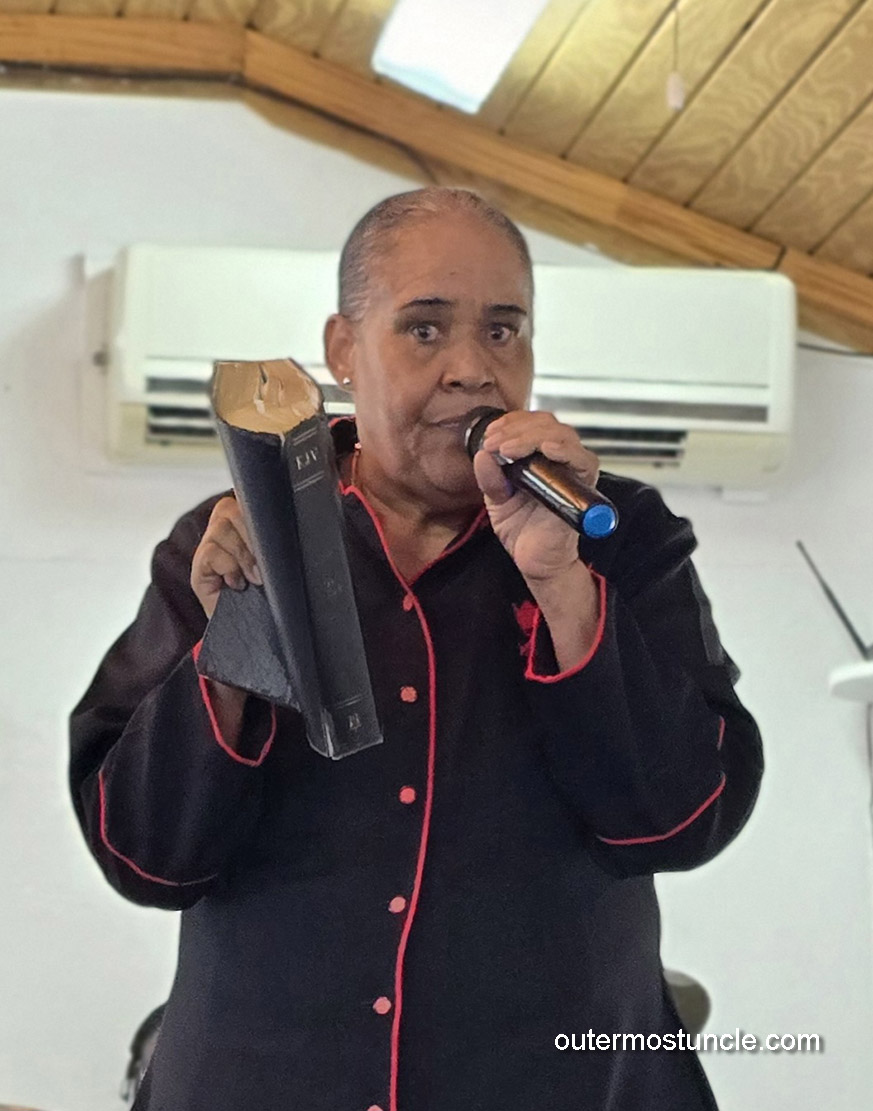
In a vision, he had heard her name. There was a church in Mason’s Bay – St. John’s Native Baptist Church – it had been closed for about 7 years. She ended up being ordained as a pastor of this church.
I wonder out loud what state a church would be in after sitting vacant for 7 years? Silent for a moment, she focuses her gaze on me, then jokes,
“I believe that my second calling is as a builder.”
Among the islands, she has left refurbished churches in her wake.
“I believe Acklins was my wilderness experience on my spiritual walk with God.”
“If you jump in my car, you’re going to hear about the Lord. You’re going to get asked, ‘Do you go to church?’”
Listening to Angela speak, my mind reflects back to our previous encounter months earlier. It was a bright, sunny afternoon in a tiny cottage in the North Victoria Hill settlement.
Angela is Denise’s (my uncle’s roommate’s daughter’s) cousin. And that is how we met. To this little cottage, I had brought that bringer of truth… that swab of revelation. That Oracle of Origin. The DNA test kit.
“I’m hoping that there is a chance of finding my father.”
By this time, I knew that her father had worked on “the Pan Am Base” and, in 1958, he left the island when she was 1 month old.
“Robert Martyn, I’m looking for you, sir. If I have any brothers out there? Any sisters? Any cousins? I would like to know.”
A month later, after I was back home, her results arrived.
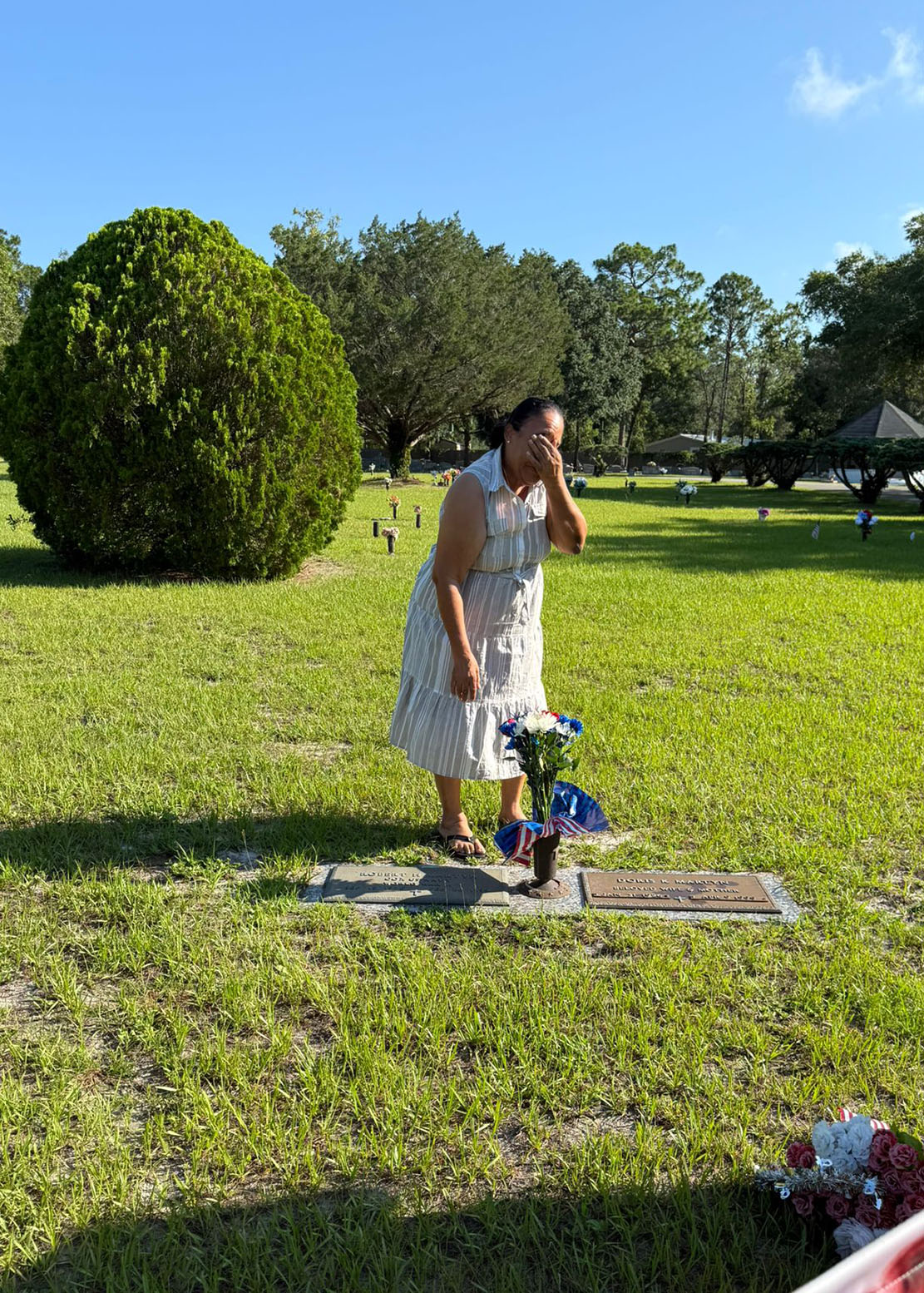
Through the ancestry site, in a roundabout way, she found her family. She texted me a photo of her [now deceased] father. They share the same square chin and round eyes.
She shows me photos of her newly discovered family. She has visited them this past summer. Found via DNA. And … yes! They belong to the same Robert Martyn who I suspected was her father.
The Sea Keeps Its Secrets
The reunion bears a shadow.
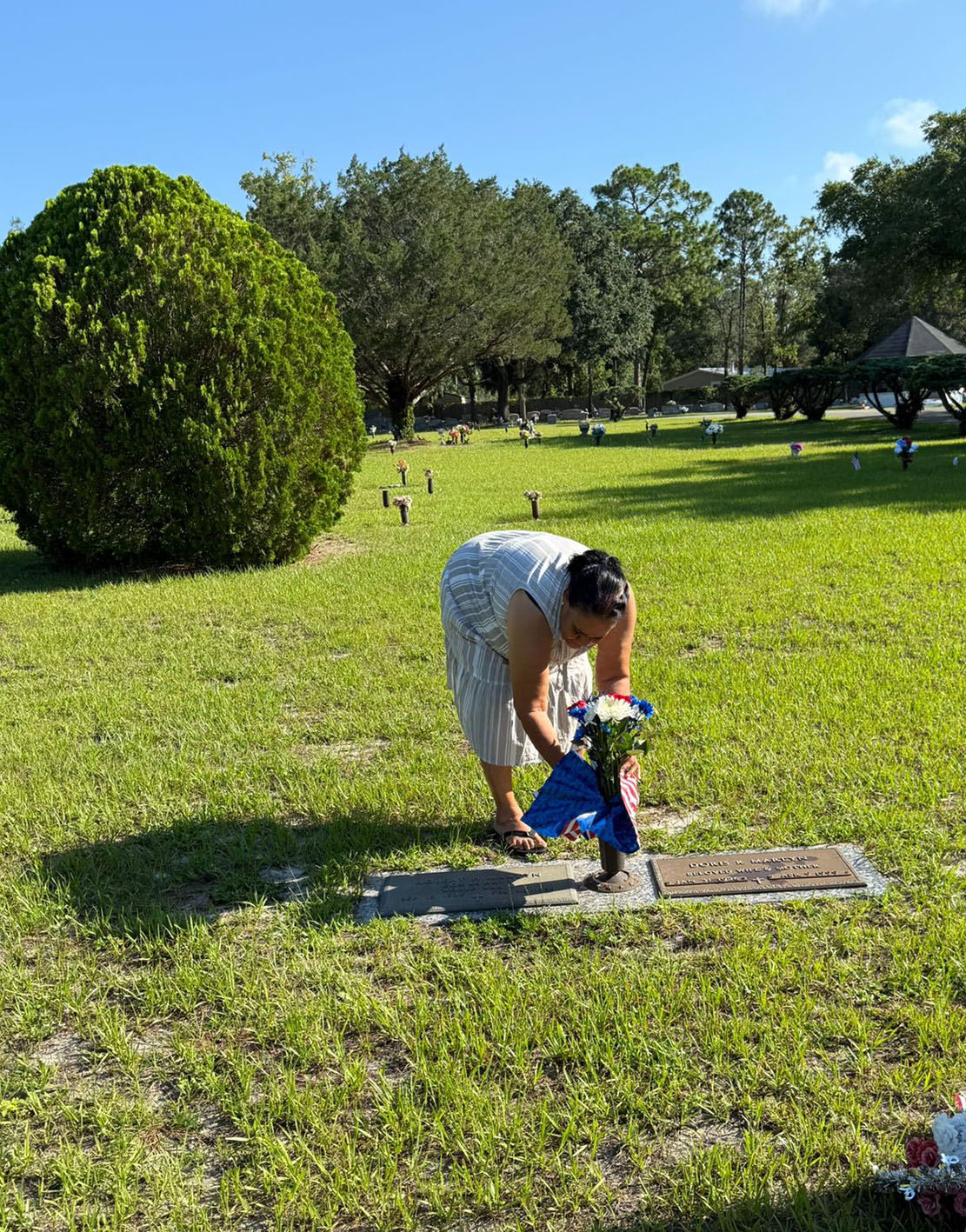
In 2015, her grown son, Pedro, disappeared from San Salvador Island. Without a trace? (Maybe.)
“It was just after hurricane Joaquin.” she says.
Bahamians often use hurricanes as time stamps. Donna, Dorian, Betsy, Andrew, and others … now Melissa. All names that not only refer to weather events, but also eras. Like, “pre-hurricane this” and “post-hurricane that”.
Angela was away in Nassau when Pedro vanished. On her Bahamas Air flight back to San Salvador, the search dogs – brought in to participate in the search for her son – were also onboard.
“It was so strange, Marcy.“
The k9s found a scent. That scent led to the sea.
Her grief runs deep. Pedro disappeared on the night before he was to renew his wedding vows. Angela sees him in her dreams.
In one dream, she wakes up from a deep sleep. He is laying across her bed, wearing swimming trunks. In the dark, she cries, “Pedro! Where you been? We been looking for you!”
In another dream, he’s on a boat, the sea rolling, black and furious.
“He and myself was on a boat like the Lady Frances [the mail boat]. The sea was rollin’. The weather was black. The sea was ROLLING! I was hanging on the back of this boat. I say ‘Lord have mercy! It’s so rough out here!’ Pedro said, ‘Mommy You think this is rough? You should see it on the back of Cat Island.’ I was holding onto the back of the boat. He said, ‘Momma, you should let go.’ and I let go. Even though it was like ocean water – when I let go, I landed on a ledge. He kept going on the boat.”
“It has not been easy, Marcy. But I will tell you, only God’s strength … [her voice breaks] … sometimes I just sit and I cry. … One time I saw him and he was up in the clouds… when I saw him, I saw two hands extended to him like this.” She holds out her hands. “He was so focused on that.”
“There is no closure for a mother.”
I find a photo of her lost son online. He bears the same angular chin and round eyes as both Angela and her absent father.
Return To The Sea
Outside, the wind stirs again, the sea restless. The fan hums.
The sea is a keeper of secrets, a mirror of faith and fate. It takes and gives and takes again.
Angela is no longer the child drowning unseen in the sea.
 Outermost Uncle
Please ask questions and leave a comment. (Some folks are unable to comment – I think it’s a Wordpress thing and I’m really steamed about it.) You can also email me.