
“…there were rumors that there was a meat grinder. Because, well, so-called meat grinders were all over the Soviet Union. And there were rumors that one such meat grinder, where people were minced alive, was in the basement of Pagari.” ~Enn Tarto – Estonian dissident
It’s June, the longest days of the year in the northern hemisphere. The in-flight screen embedded into the back of the seat in front of me displays a cartoonish plane, flying the polar route from Seattle to Helsinki. I’m headed to Copenhagen to run across a really famous bridge. I can’t pronounce its name, so I call it The-No-One-Is-Making-Me-Run-Across-It Bridge. I close my eyes – I don’t actually sleep. Each time I open them, the plane on the screen has moved further along its route. The noise tries to penetrate my earplugs. For the most part, it succeeds. The screen’s graphic claims we’re moving at 550 miles per hour at 40,000 feet, high above a stylized version of Northern Canada, headed toward the Arctic Archipelago. I’m thinking about the trip ahead. I’ve spent months training for this bridge run. It’s only a half marathon, but I’m worried about the “up” part. It’s a big bridge.
I stew over my reasons for extending this trip beyond Denmark, visiting four countries total. I’m visiting places near Russia and looking for places formerly held by the Soviet Union. The speculation about my uncle taking up with the Russians – either willingly or less so – has me curious. What is it like to live like that? What was it like to live under Soviet rule? My plan is to seek out occupation-era sites. Anything space-related interests me as well.
On the screen, the plane looks monstrous. It’s larger than any city we fly over. Greenland lasts a long time. As we circle down past Iceland and over Scandinavia, the aircraft on the screen makes clumsy, sudden turns, – yet our ride is steady. I’m looking forward to completing this circle of discovery … which I do, in more ways than one.
Copenhagen: Boyscouts on Steroids
Copenhagen mixes European architecture with oddball science. A creative crew of folks who call themselves Copenhagen Suborbitals run a crowdfunded space program. These “volunteer engineers and artists” invite folks to visit their unique facility. The goal, as their website states, “… is simple but audacious: to fly an amateur astronaut to space and return them safely to Earth.” Copenhagen Suborbitals is located on an industrial island area outside of the city. At the time of our visit, there was a music festival called, “CopenHell”, sharing the island and it was in full swing. Our Suborbital guide, Jørgen, who cut a fine figure with his lean build and silver pony tail, walked us through the facility, which is a bit modest considering the number of ambitious projects they’ve got in the works. So far, they have launched six rockets from a floating launch site in the Baltic Sea. They chose the Baltic site for rocket launch after realizing their location in Copenhagen was “too close to Russia”.
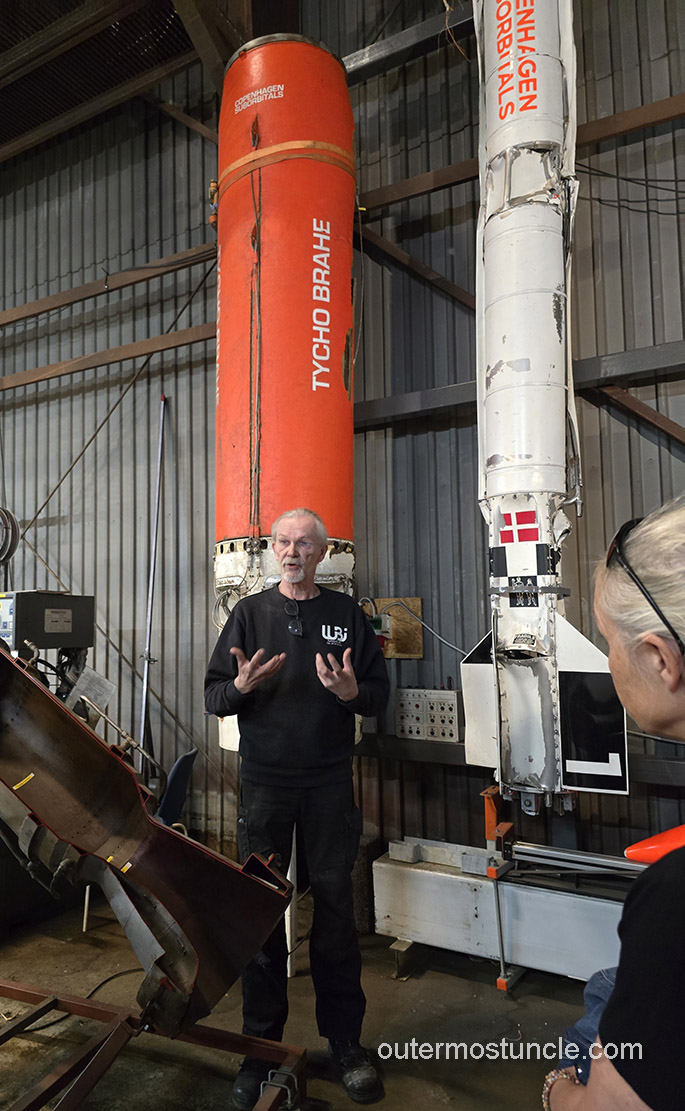
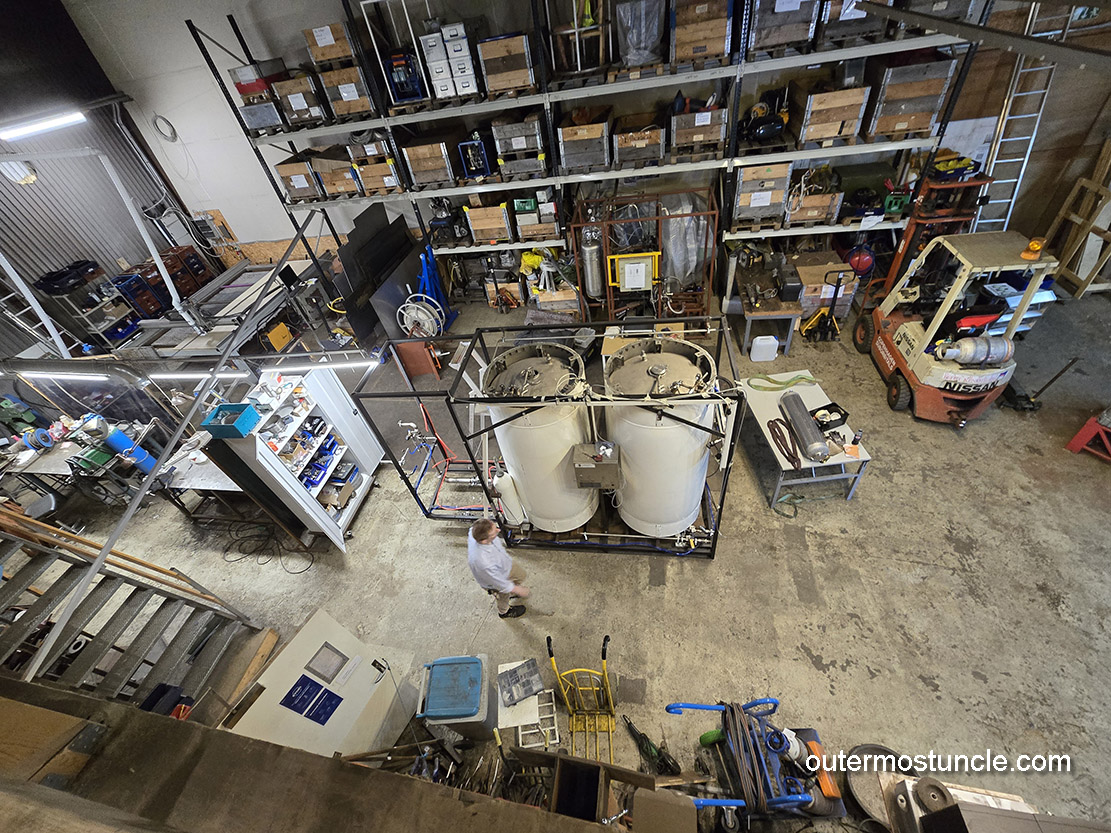
Jørgen refers to the endeavor as “boyscouting on steroids”. First up is the previously-launched rockets display. He pointed at rocket parts and explained how “Chinesium” was cheaper than the good metal. During a test of their Spica rocket, they installed a fake astronaut into the crew capsule. Jørgen paces, head down … musing, then gestures with his hands. “We learned a lot from that launch, and subsequent crash.” after a pause he added, “We managed to kill the astronaut in three different ways,”
I’d wondered how they tracked their rockets? Apparently, none of their rockets has gotten high enough to require tracking?
I think my uncle would’ve been in his element here.
We left Copenhagen Suborbitals with an appreciation for lofty goals, a new knowledge of private space exploration, and a really cool keyring.
Helsinki: Russia is a Tsunami
We aced the big, giant bridge run and left it in our dust. Taking the fast train to Stockholm for a few days, we then caught a ferry to Helsinki.
Finland and Russia share a long border and a rocky relationship. Our Airbnb host is a fashion photographer named Marica. Her large basement apartment exudes a bohemian flare. She had us over to her next-door studio for a chit chat and we got to talking politics, etc.
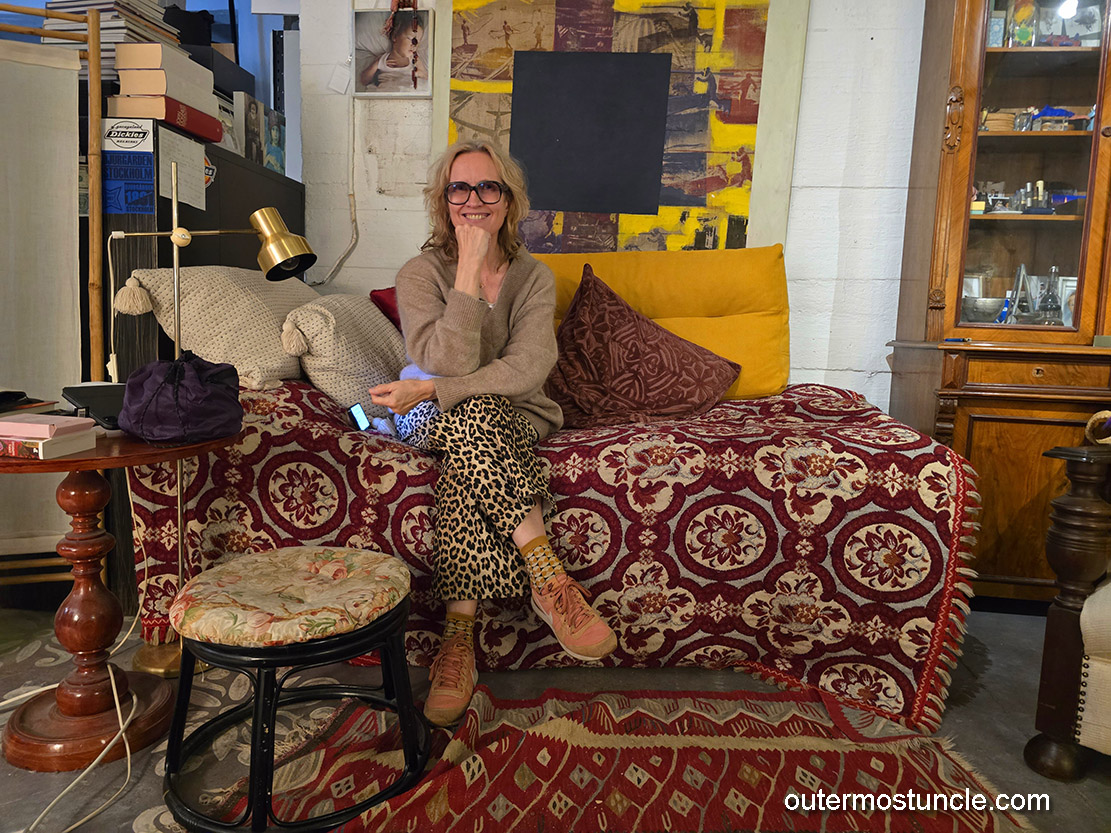
Reclining on her overstuffed loveseat, wearing leopard print pants and pink sneakers, she said, “Americans all talk about Trump. Here it’s Putin, Putin, Putin. In Helsinki we are so close to Russia. We are hardened to it.”
It’s like, at home on the Washington coast – people ask if we’re afraid of a tsunami? A tsunami is an ever present threat. But we’re hardened to it.
Russia is Marica’s tsunami.
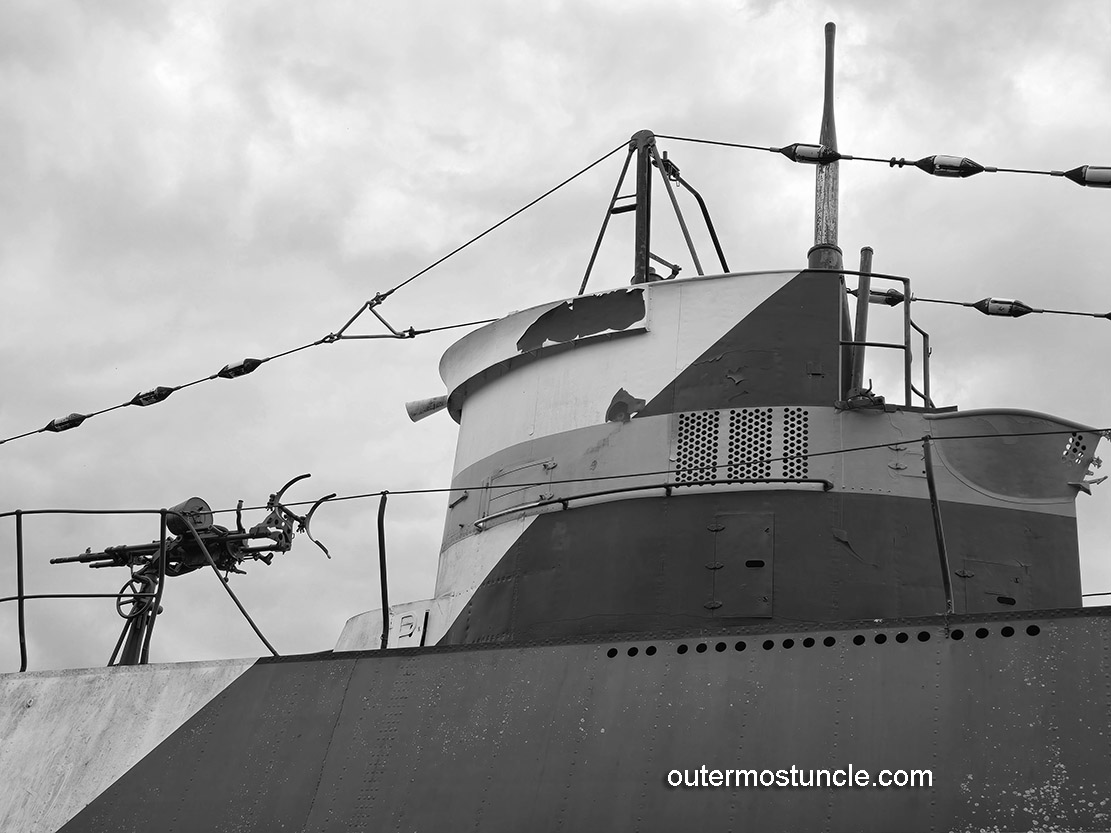
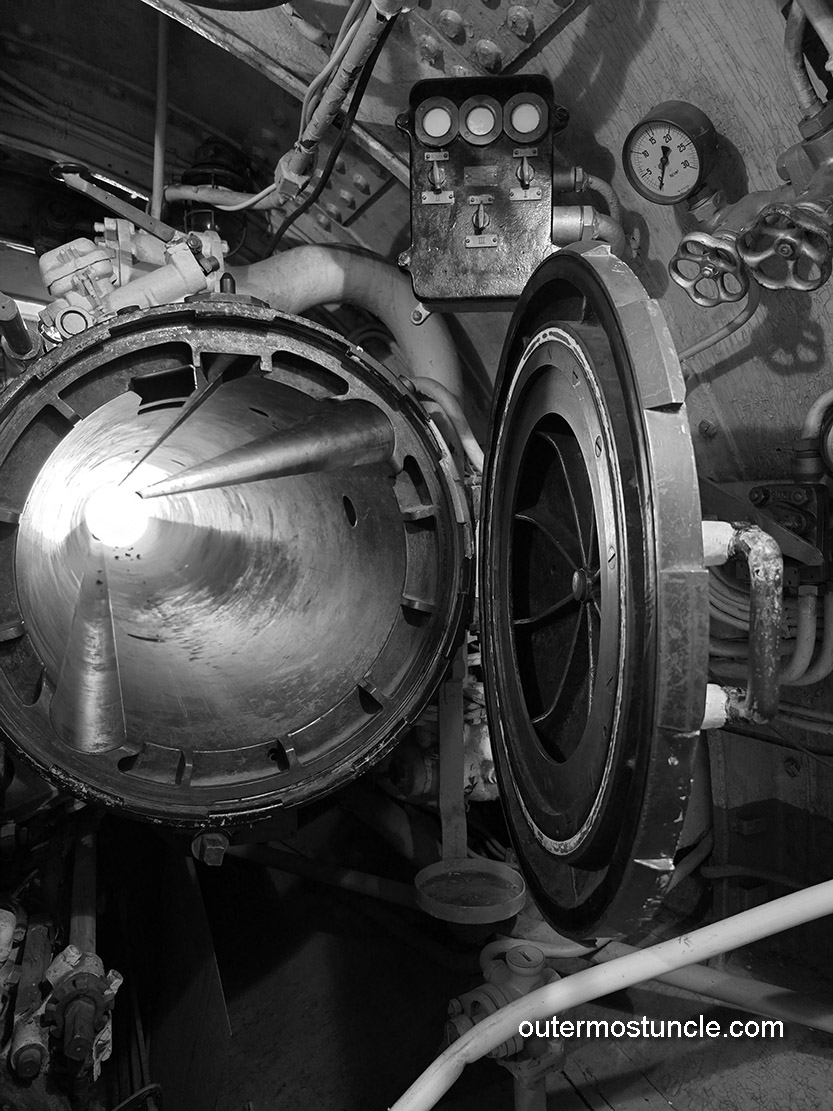
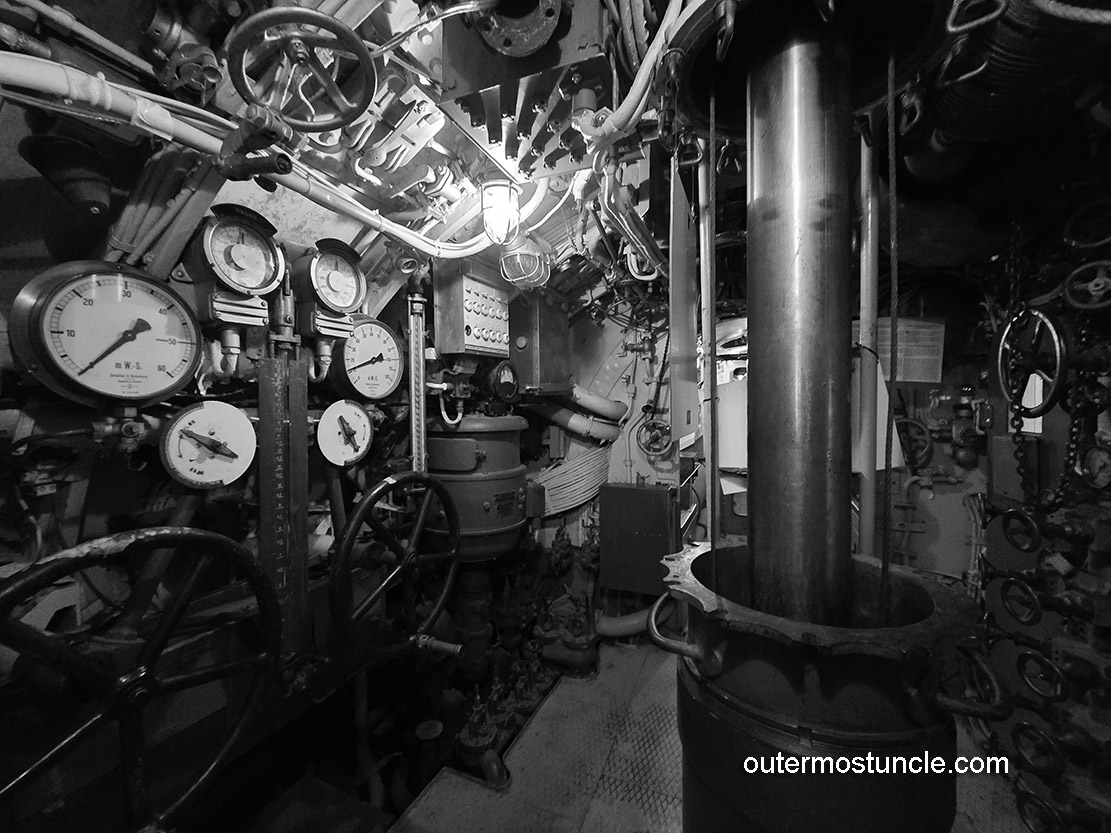
From Helsinki we take a small ferry to an old island fort. There is a submarine there that I want to visit. Unimaginable claustrophobia.
Tallinn: Dark Tourism
Another ferry ride takes us to Estonia – a country that had been under Soviet occupation from 1940 until 1991 (with the Germans taking over for only a year during World War II). If you’re a fan of “dark tourism”, Estonia – and especially Tallinn – has much to offer. Staying in Tallinn for a few days, we find a defunct KGB prison with the meat grinder quote (up there, above) written on a cell wall.
Known as Pagari 1, the imposing stone building was used as a pre-trial “detention center” for the NKVD and its successor, the KGB.
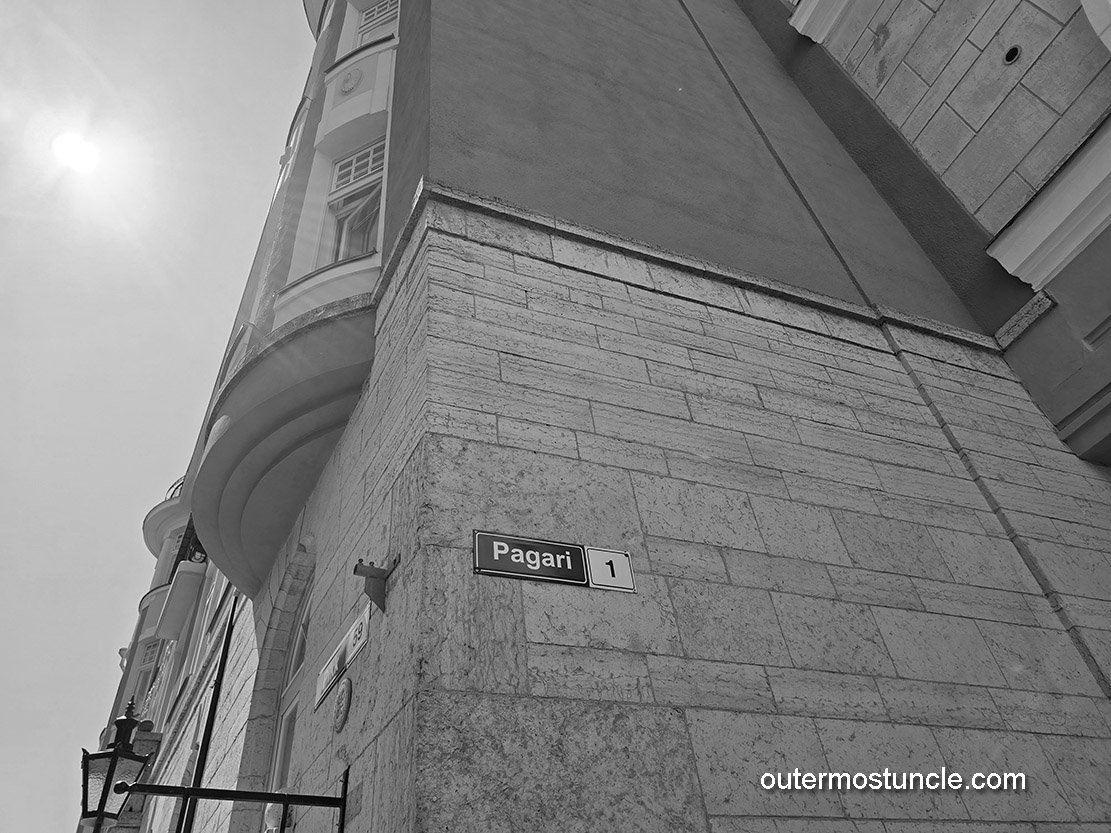
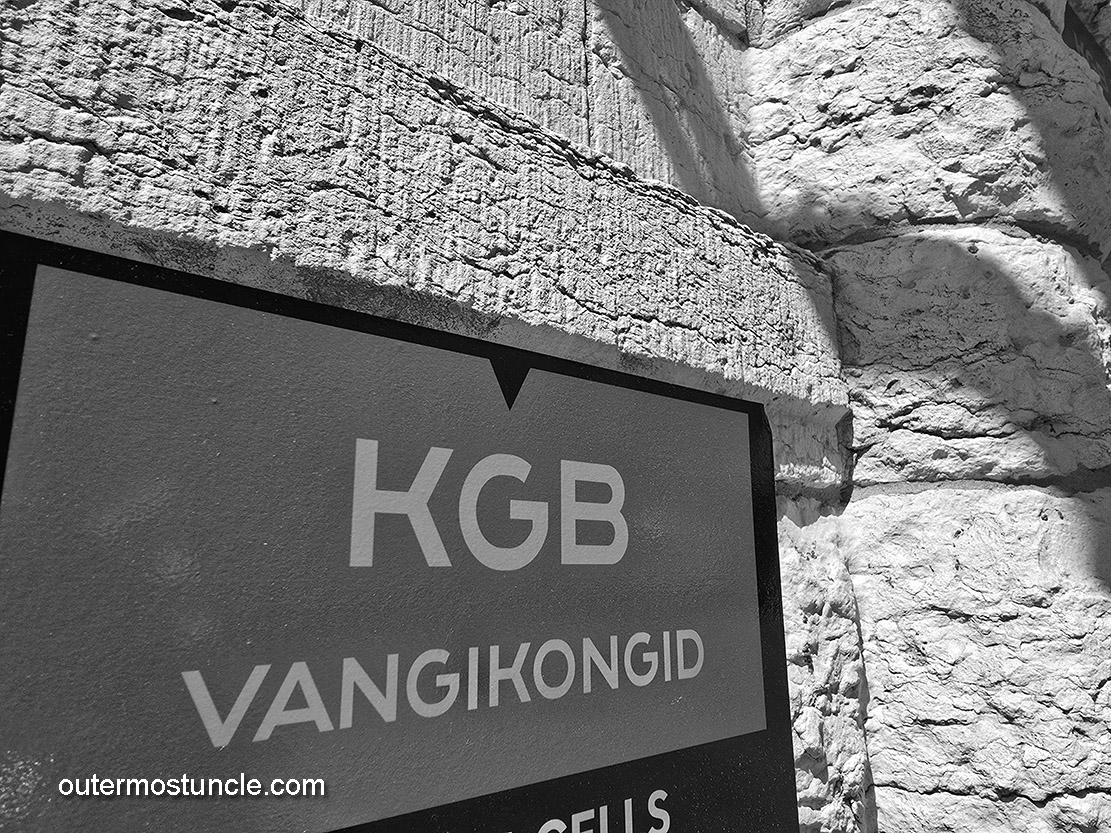
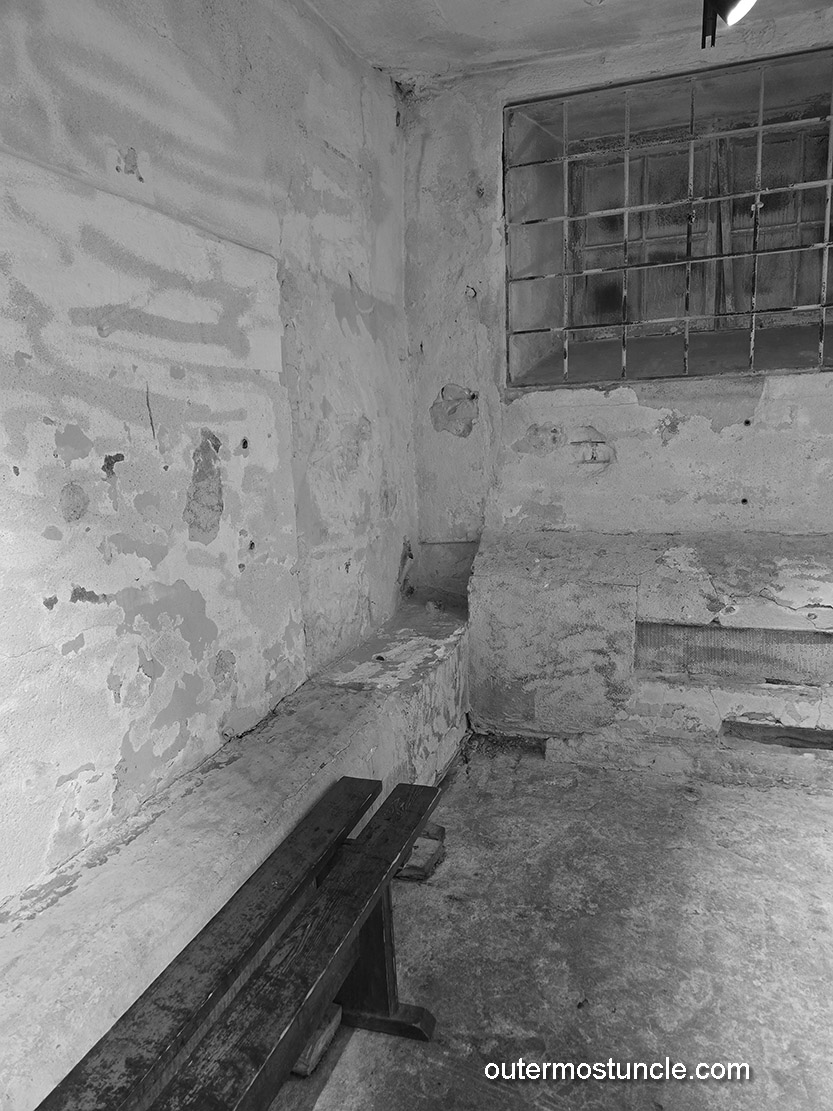
If my uncle had taken up with the Soviets, would he have spent any time in prison cells such as those at Pagari 1?
Tallinn is just two hours from the Russian border, but I resisted the urge to drive there. State Department warnings don’t usually stop me, but Yelp reviews of Russian border crossings will:
“Gates closed after you enter – never opened again.”
Kind of a deterrent.
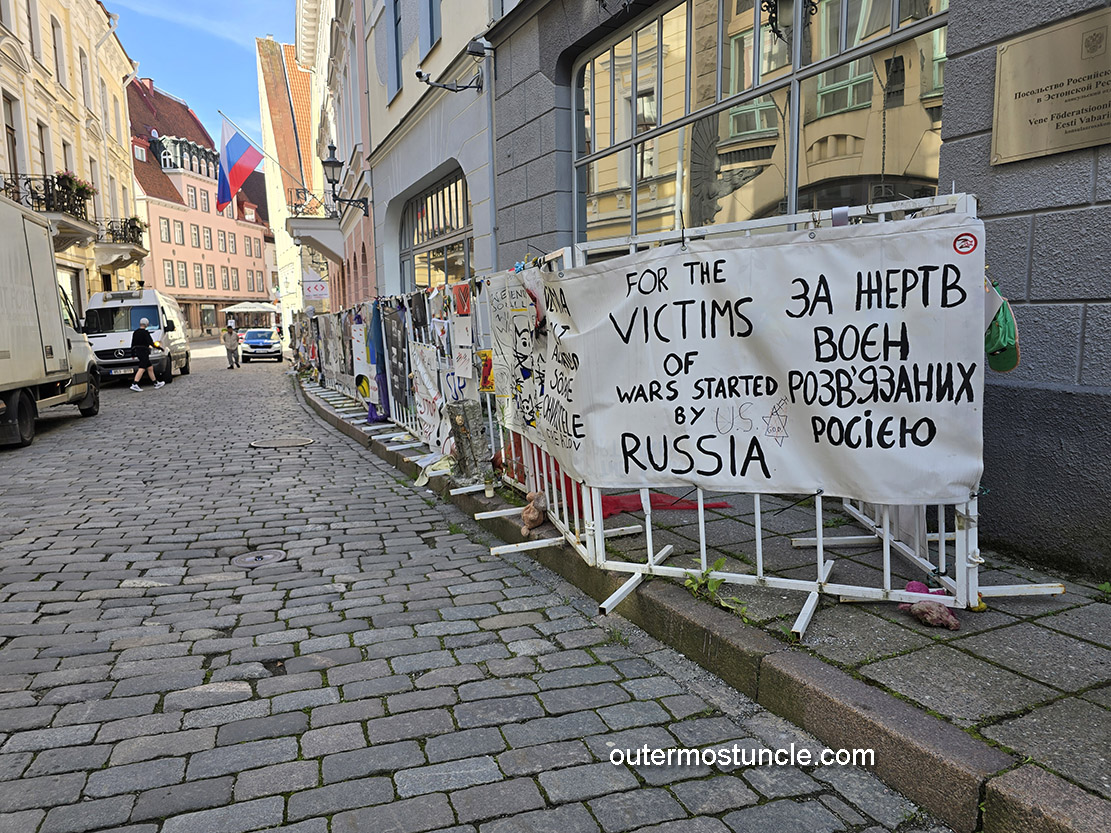
We purchase items at a Ukrainian-owned shop across from the Russian embassy. We visit a Banned Books Museum. We seek out Cold War era things.
The Cameras Speak
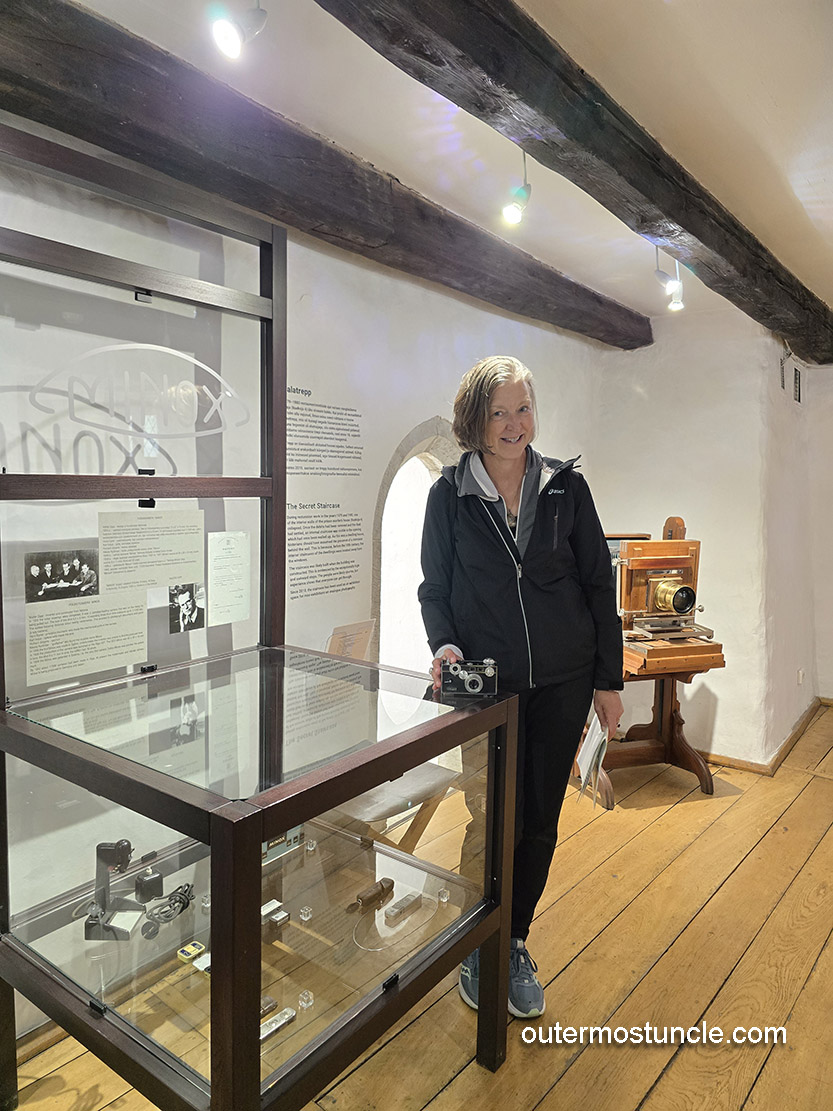
As it turns out, Tallinn is where Walter Zapp, in 1934, developed and patented the Minox camera. A museum in Old Town displays the very model my uncle owned – sister to the one I inherited. The cameras were later manufactured in Riga, Latvia until World War II, when their manufacture was moved to Germany. It was fun, checking out where that little baby was born.
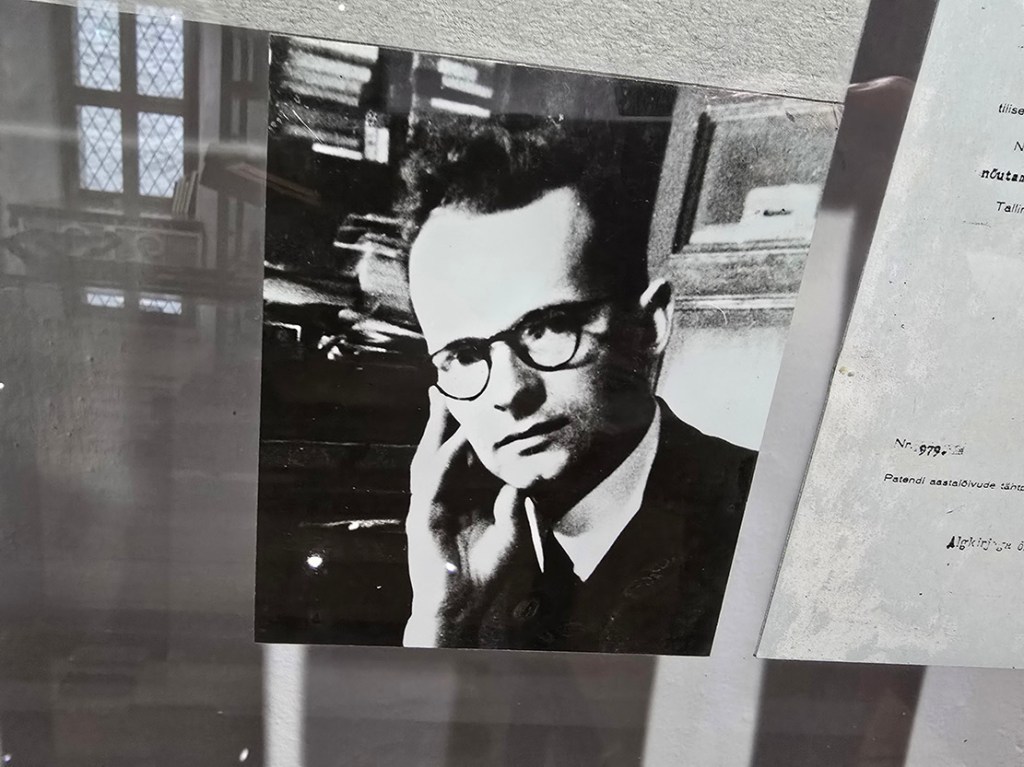
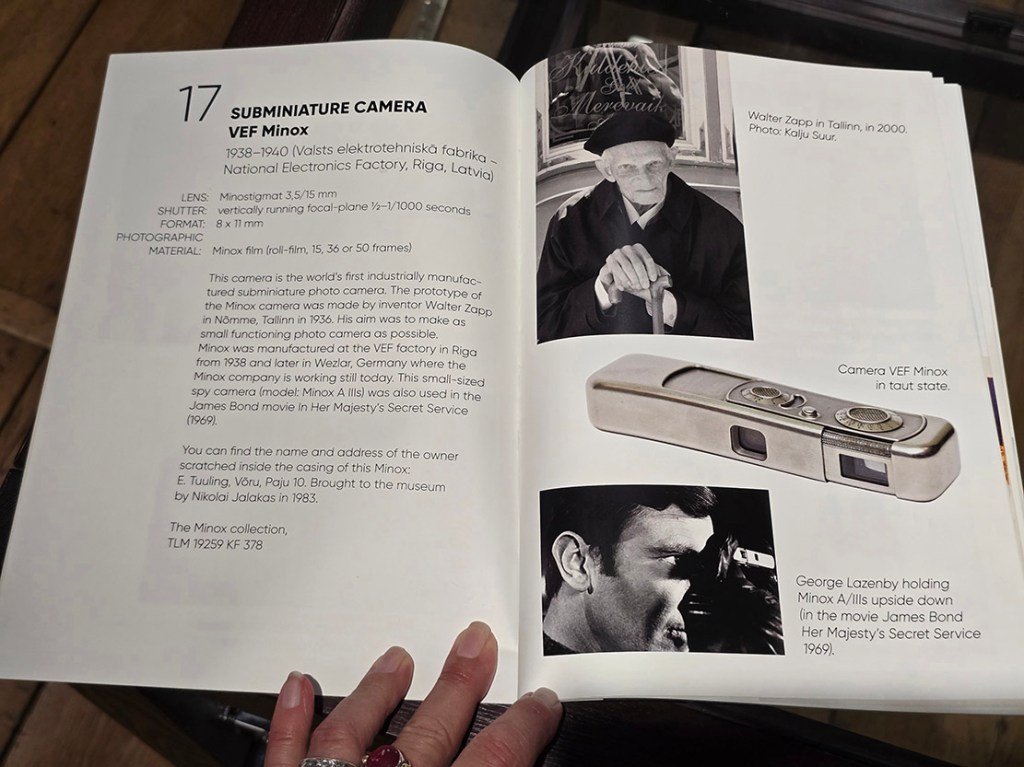
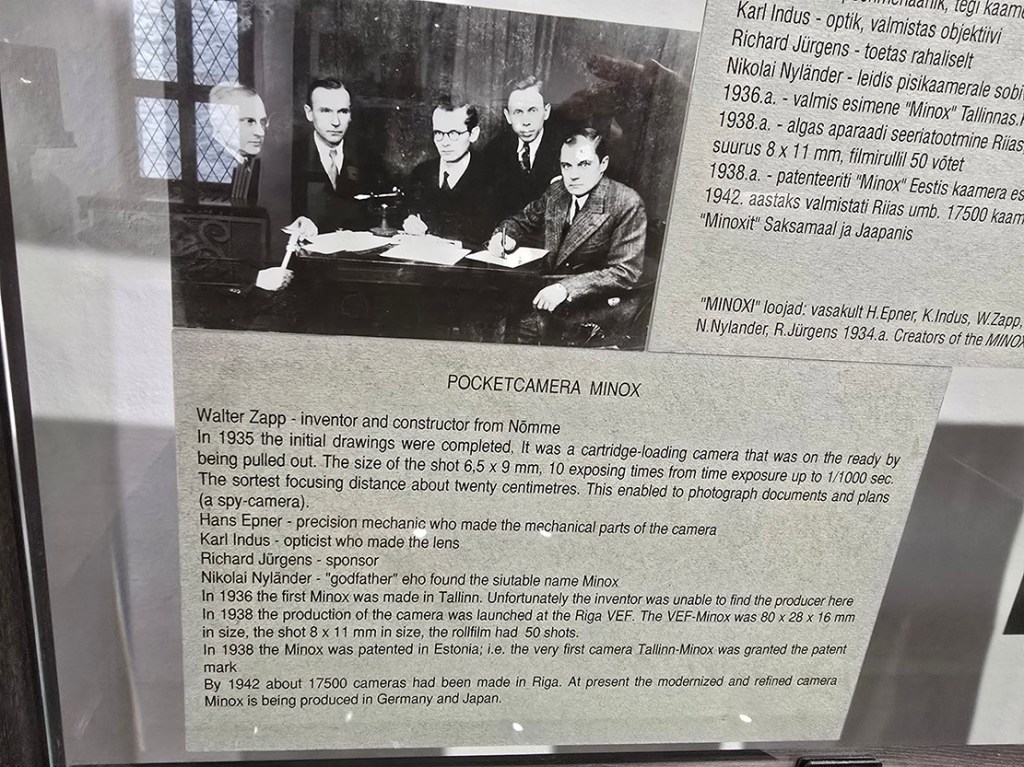
On a flat, gray day [I’ve always wanted to name paint colors, so let’s call this “occupation gray”] – perfect for exploring Soviet sites – we take a walk that focuses on Soviet Tallinn. We and our guide are joined by a Canadian guy and a guy who never says anything so I don’t remember anything about him. My traveling companion thinks he was Irish. We’ve decided that since we can’t remember him, he must have been a spy – an expert at blending in. We walk through communist-era sites around the city. The Canadian casually lets it drop that he’s been to Chernobyl. “Yeah. I ate lunch with the workers there. ” We stood in stunned awe. Our guide doubled over, clutched his chest, and performed a worship bow: ” You have done the HOLY GRAIL of dark tourism!”
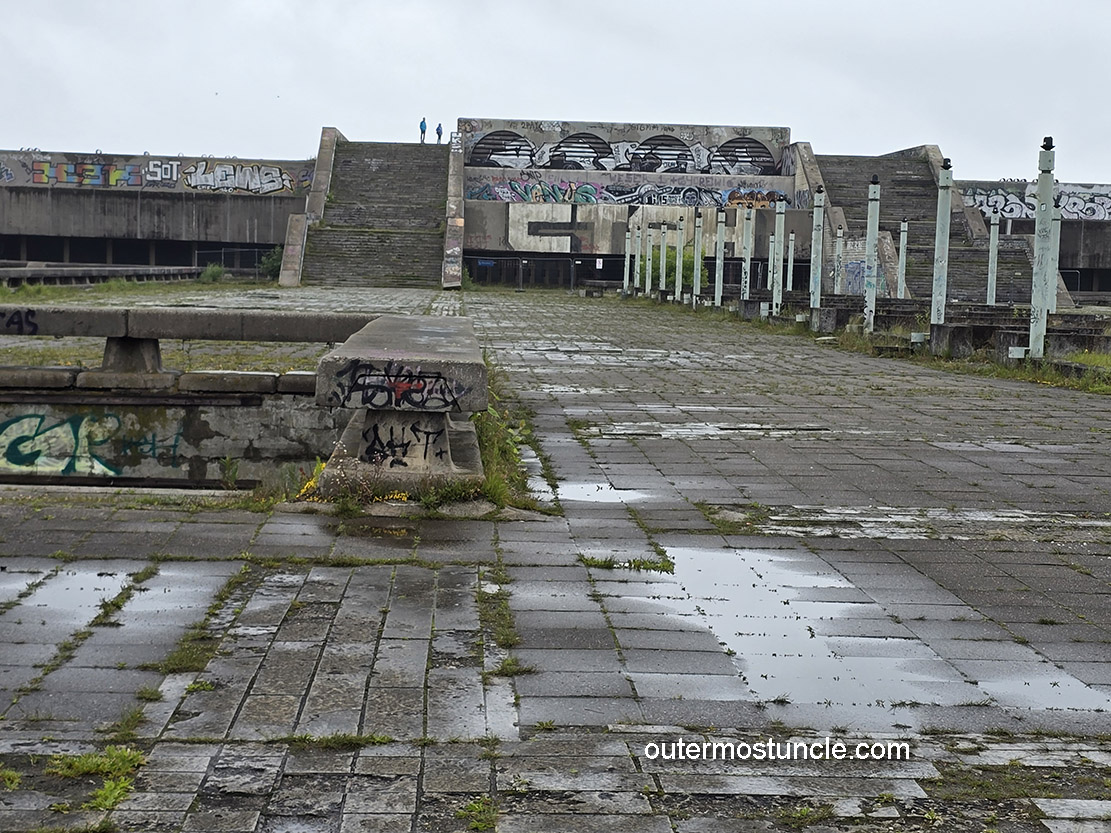
On to Linnahall which is a massive, brutalist structure, originally built for the 1980 Moscow Olympics. It’s a striking relic of Soviet ambition and decay.
Tallinn’s Central Market is the last remaining Soviet-era market in the city. It’s not a tourist market, like Old Town. Estonian, Russian and … other languages I don’t recognize are thrown around like the fruit and used clothing for sale here.
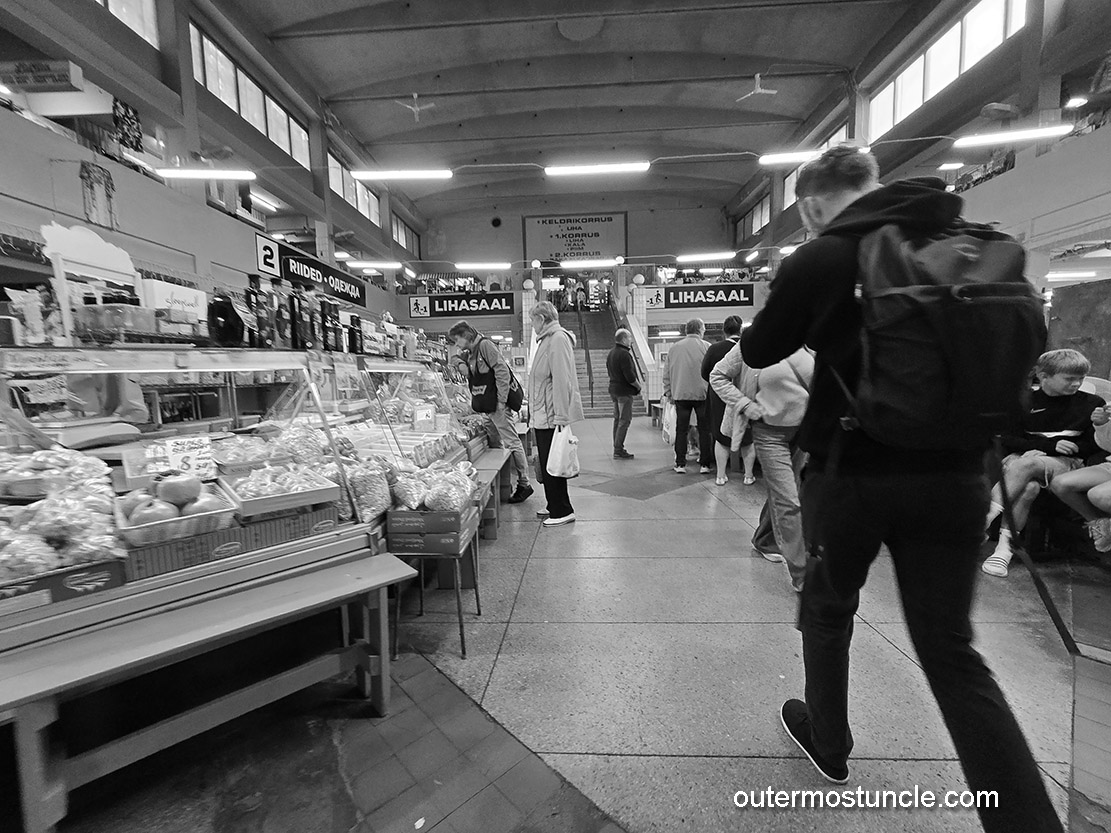
Tallinn embraces its past in an effort to let the world know how easily things can go awry. We discuss a global mindset and how a determined and menacing entity can turn neighbors into enemies. How a government can force people under duress to lie, to make accusations. “What’s happening right now in the United States is very, very scary.” my friend said. Our guide’s reply was heavy with conviction and shadowed by unease: “Very.”
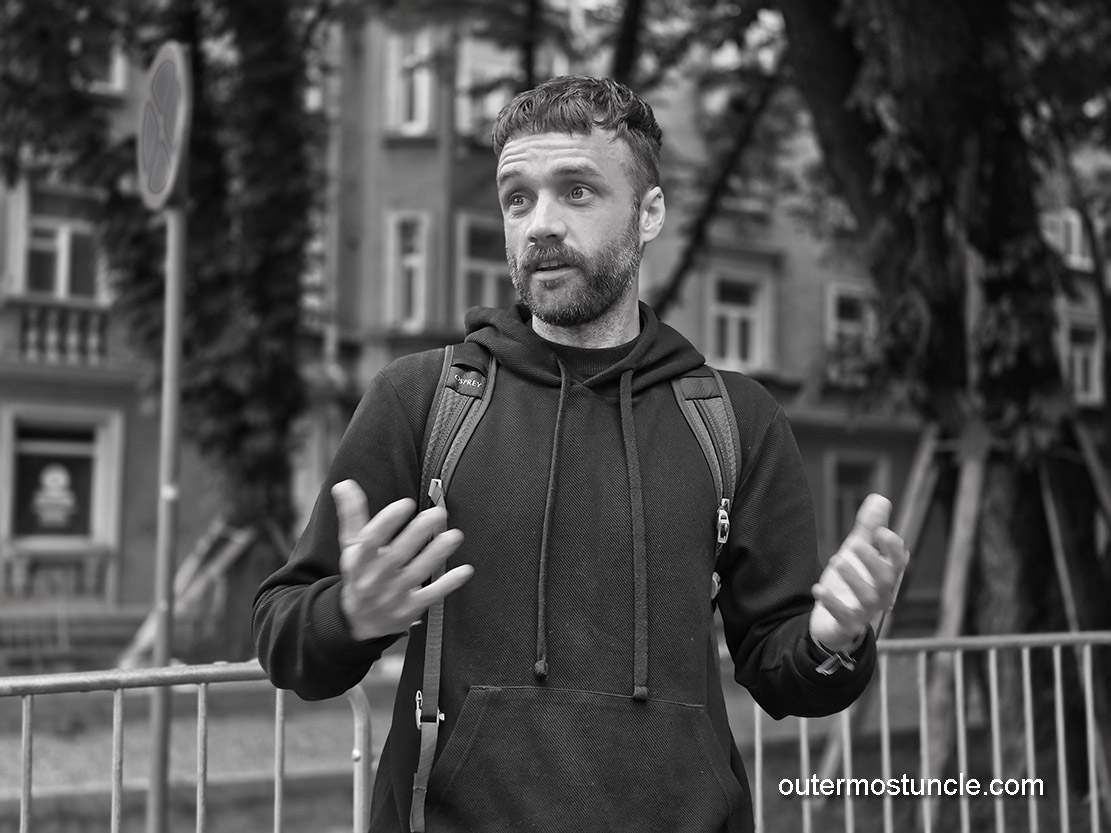
We return to a somewhat quiet Central Market after saying good-bye to our new friends. In an “Antik” (junk) shop a vendor insists the two vintage Soviet cameras I pick up, work.
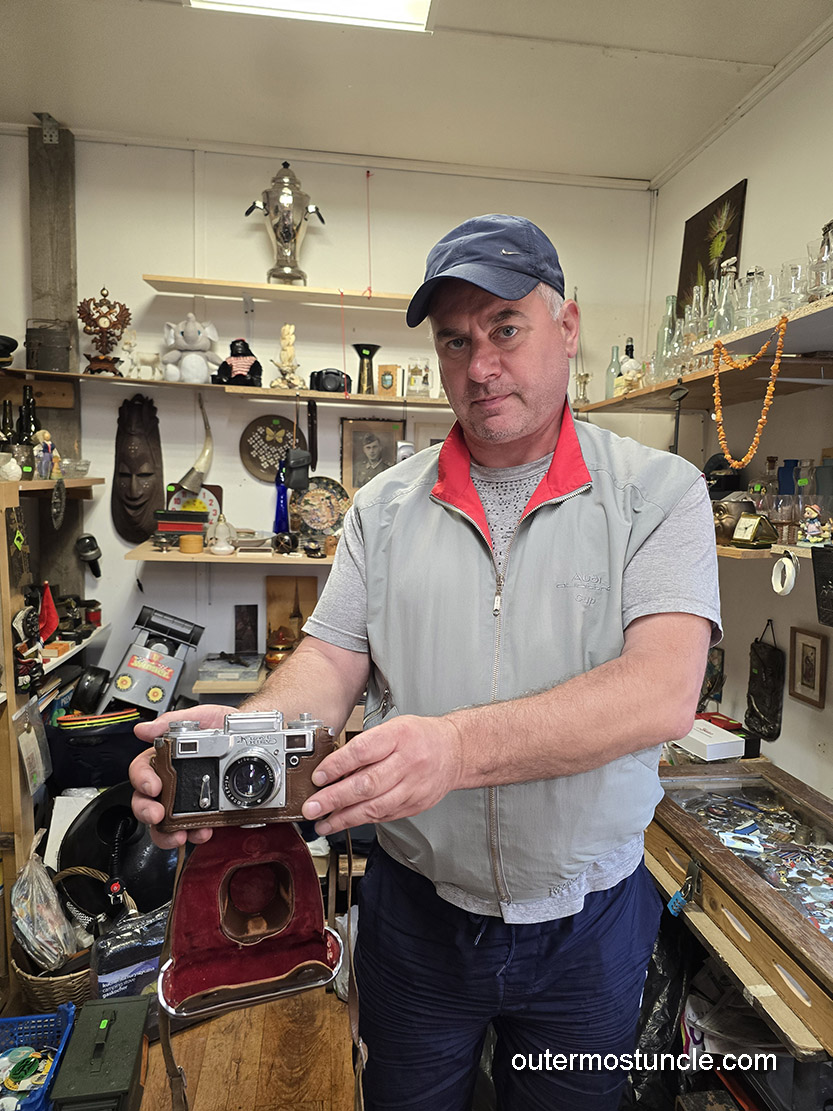
“Yes! Yes!” He says! I know he’s … umm … exaggerating. But I buy them anyway. Both contain half exposed rolls of film. €20. Even with the shutter stuck on the Kiev 4A it’s a score! Over the course of the day, I finish off the roll of 35mm film in the other camera, a Fed-2.
Before leaving Tallinn, we visit the 23rd story of the 22 story Viru Hotel. When the Soviets left in 1991, that 23rd story was found to contain – no surprise – surveillance equipment. At one point the tallest building in Tallinn, the hotel has large windows and a sweeping view of the city. The best view of all belongs to that off-limits top floor. In its heyday, the Viru was a place for foreign dignitaries to stay in pampered comfort. It really wasn’t much of a secret, what was going on on that 23rd floor that didn’t exist. One anecdote goes – a hotel guest was in the bathroom. He muttered to himself, “Oh. I’m out of toilet paper. What will I do?” Five minutes later, room service knocked with a fresh roll.
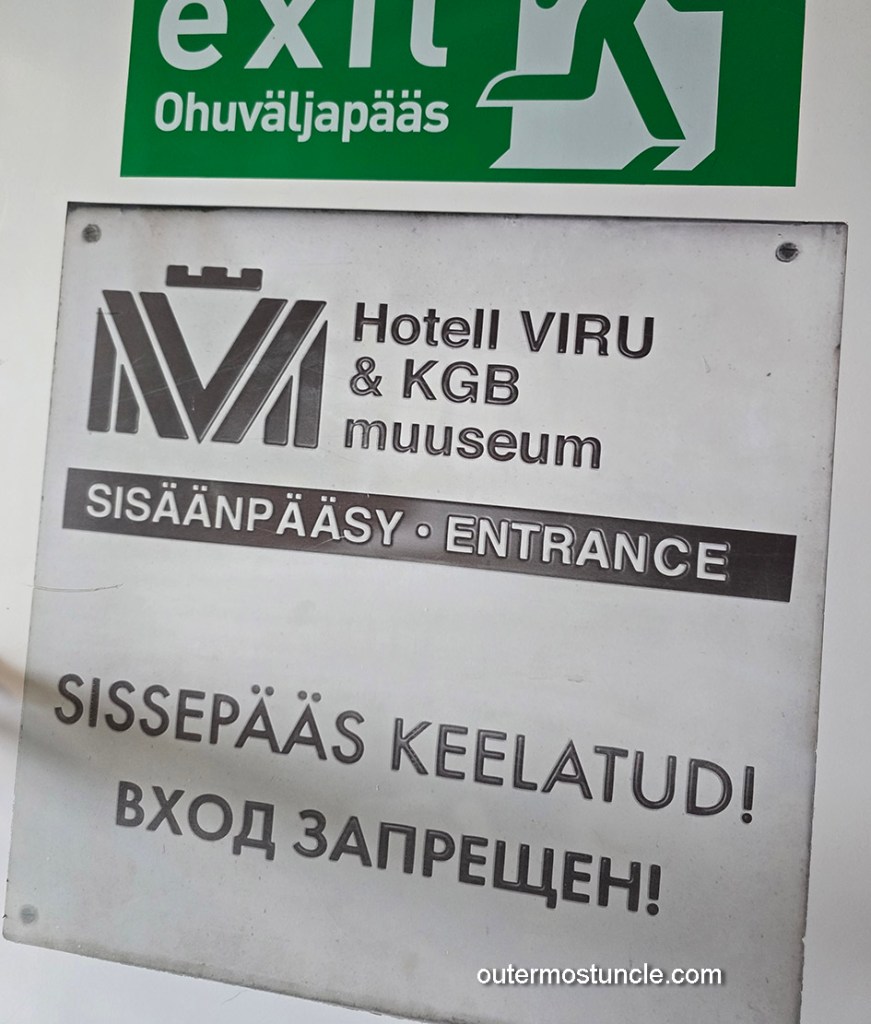
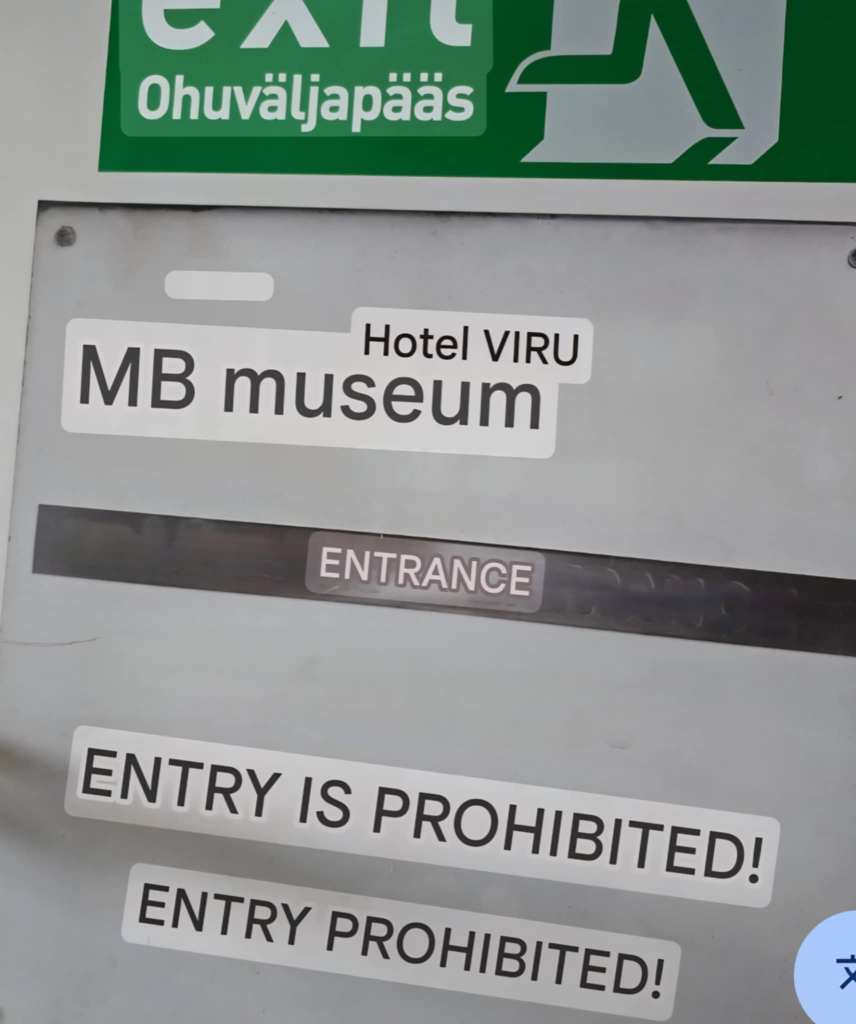
On the 23rd floor – whose entrance sign translates as “Entrance” then, “Not an entrance” then, “Nothing to see here.” all at once – we view ashtrays with implanted listening devices. Stubbed out cigarette butts remain, left behind in a hurried Soviet departure. We see secret telephones and hear stories of the woman who sat in a chair in the hallway, merely to observe the comings and going of the guests. occasionally making notes in her notebook.
Had another woman, in some other hotel, written notes about my uncle’s comings and goings?
Before we leave for home, we head back to Finland. During the Soviet occupation of Estonia, Finland sent radio broadcasts across the Baltic Sea, keeping Estonia informed of world news. It was illegal to own a radio in occupied Estonia, but … you know.
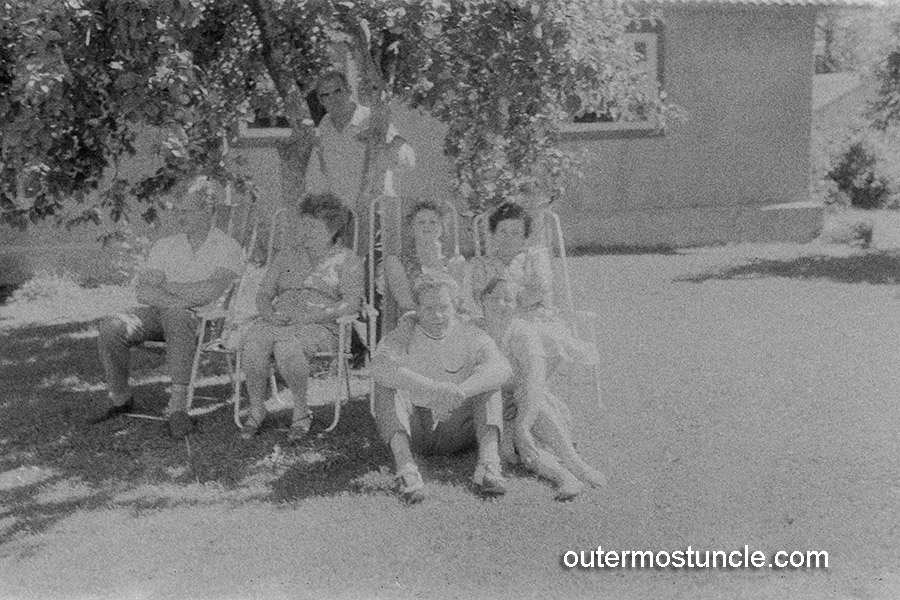
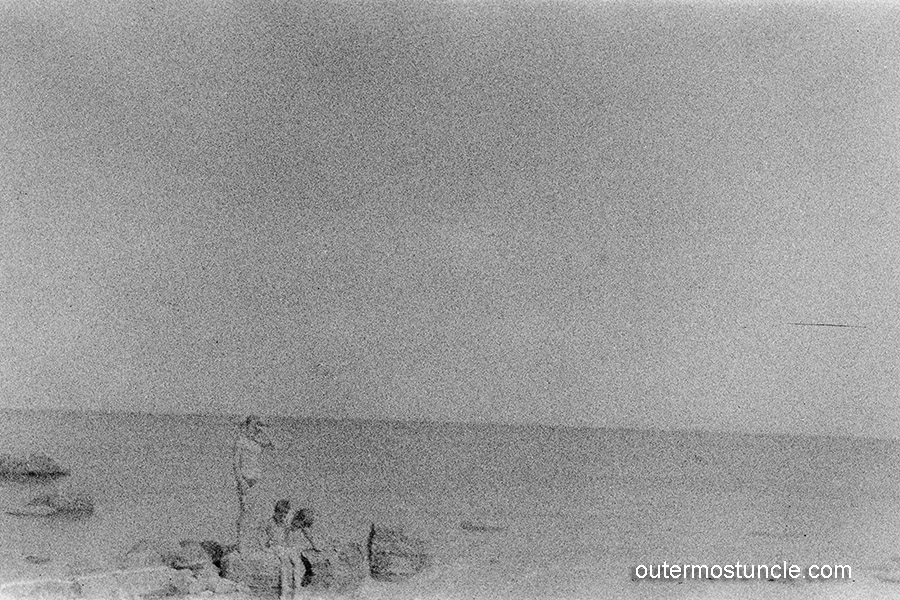
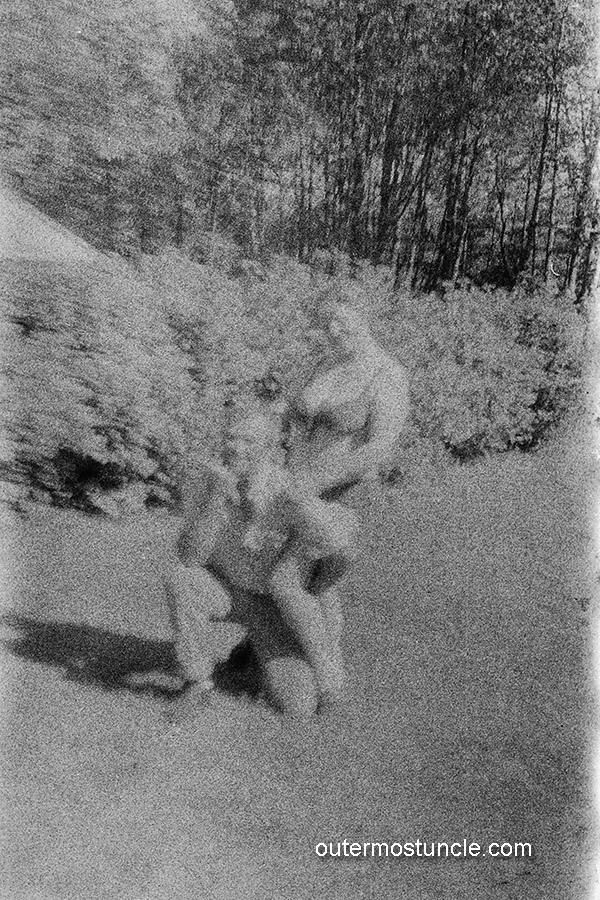
When I got home, I processed the film I found in my newly acquired Commie Cams. The rolls of film were each of a different discontinued variety, the developing process no longer in use and the chemicals no longer available. That, and I wasn’t even exactly sure what the films were, made me not hold out much hope. The film from the Fed – 2 was blank. The film from the Kiev 4A however had a half a roll’s worth of images. Expecting images of spies and brutalist architecture, I was surprised to see that communist countries have sunshine, just like we do.
Closing the Circle
That’s when it hit me: this whole adventure began with the idea of taking my uncle’s cameras back to the island where he was last seen. Now I have a Soviet-built camera from a Soviet-occupied country, steeped in Cold War history.
I could complete the circle – return to that island, and let a camera from the other side tell its own story.
Preparations are being made, comrade.
Here’s a joke for you. A Russian citizen is crossing the border into Estonia and hands his passport to the customs officer.
The customs officer asks: “Name?”
The Russian replies: “Vladimir Krylov”
The customs officer continues: “Occupation?”
The Russian replies: “Not yet, just visiting.”
 Outermost Uncle
Please ask questions and leave a comment. (Some folks are unable to comment – I think it’s a Wordpress thing and I’m really steamed about it.) You can also email me.